

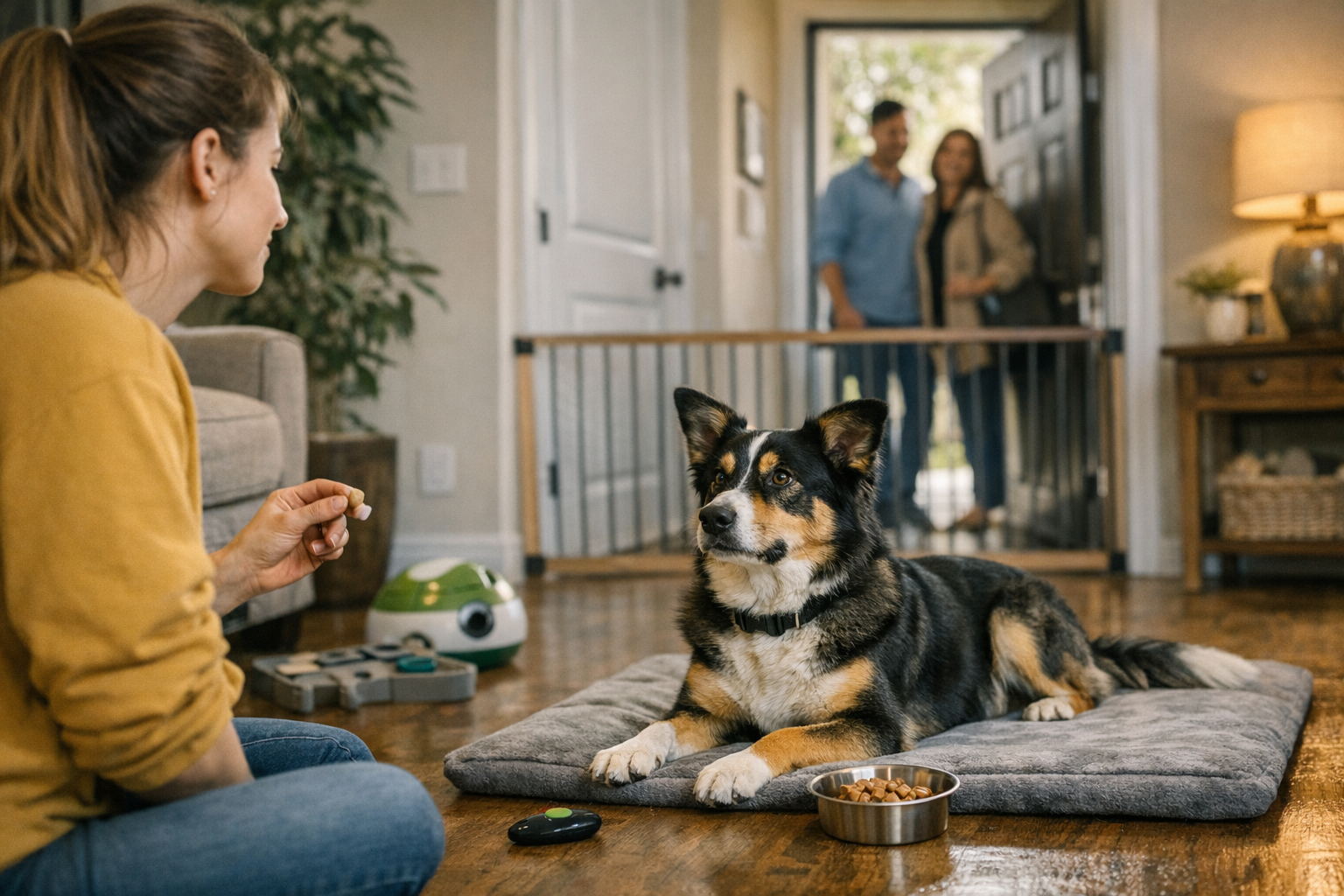
How to Teach Your Dog to Be Calm During Visitors (Doorbell Training)
Having visitors over can be stressful for both dogs and their owners. Teaching your dog to stay calm when the doorbell rings is essential for a peaceful home. In this article, we’ll explore effective strategies, expert tips, and common pitfalls to watch out for during this training process.
Why This Topic Matters for Pet Parents
Many dogs get excited or anxious when someone arrives at the door. This can lead to barking, jumping, and even aggression. Training your dog to remain calm contributes to:
- A more enjoyable experience for guests.
- Reduced stress for you and your dog.
- Better control during unexpected situations.
- A safer environment for children and visitors.
Key Insights
- Dogs often react to the sound of the doorbell as a cue for excitement.
- Calm behavior can be taught through consistent training.
- Positive reinforcement is the most effective training method.
- Short, focused training sessions work better for learning.
Expert Tips
As a pet parent, you can adopt several techniques to keep your dog calm when the doorbell rings:
- Start with Desensitization: Practice ringing the doorbell when no one is around. This helps your dog get used to the sound without the added pressure of visitors.
- Use a Command: Teach cues like “place” or “go to your bed.” Reward your dog for staying calm and following these commands when the doorbell rings.
- Practice Makes Perfect: Set up training sessions where you ring the doorbell multiple times. Each time, reward the dog for calm behavior.
- Manage Their Environment: If possible, keep your dog in a separate room or use baby gates. This prevents them from running to the door immediately.
- Stay Calm Yourself: Your energy affects your pet. If you’re anxious or excited about visitors, your dog is likely to feel the same.
Best Products or Treat Types
Using the right treats or tools can enhance your training sessions. Consider the following options:
- Soft Treats: Quick to chew and easy to swallow, soft treats can keep your dog focused during training.
- Treat Puzzles: These engage your dog’s mind and can provide a calming distraction when guests arrive.
- Interactive Toys: Using toys that dispense treats can help your dog stay calm while waiting for visitors.
- Clickers: Training clickers can help mark good behavior, making it easier for your dog to understand when they’ve done the right thing.
Common Mistakes to Avoid
Every pet parent makes mistakes while training their dogs, but being aware of them can help you avoid potential setbacks:
- Inconsistency: Failing to stick to a routine can confuse your dog about what is expected of them.
- Over-Reaction: Responding to barking or jumping with anger can heighten anxiety instead of calming your pet.
- Skipping Rewards: Forgetting to reward your dog for good behavior can diminish their motivation to be calm.
- Too Much Pressure: Conducting long training sessions can lead to frustration. Keep it short and fun!
FAQs
1. How long does it take to train my dog to be calm during visitors?
Every dog is different. You may see improvements in a few weeks, while others may take months. Consistency is key!
2. What if my dog won’t stop barking at the door?
If your dog continues to bark, consider limiting their access to the door during training or using sound desensitization strategies.
3. Can I train my dog to be calm with a clicker?
Yes! A clicker can be an effective tool to reward good behavior, helping your dog associate calmness with positive outcomes.
4. Is it necessary to take my dog for walks before visitors arrive?
A pre-visit walk can help burn off excess energy, making your dog more likely to be calm when visitors arrive.
5. How do I know if my dog is ready to meet visitors?
When your dog can sit or lie quietly with minimal distractions, they may be ready to meet guests while reinforcing calm behavior.
6. What should I do if my dog reacts aggressively to visitors?
If aggression is a concern, consider consulting a professional trainer or behaviorist for personalized guidance and strategies.
Conclusion
Training your dog to remain calm during visitors is a rewarding process that enhances the quality of life for both you and your pet. By implementing the techniques, tips, and products outlined in this article, you can create a peaceful environment when guests arrive. Remember, consistency and patience are key to success. Happy training!