

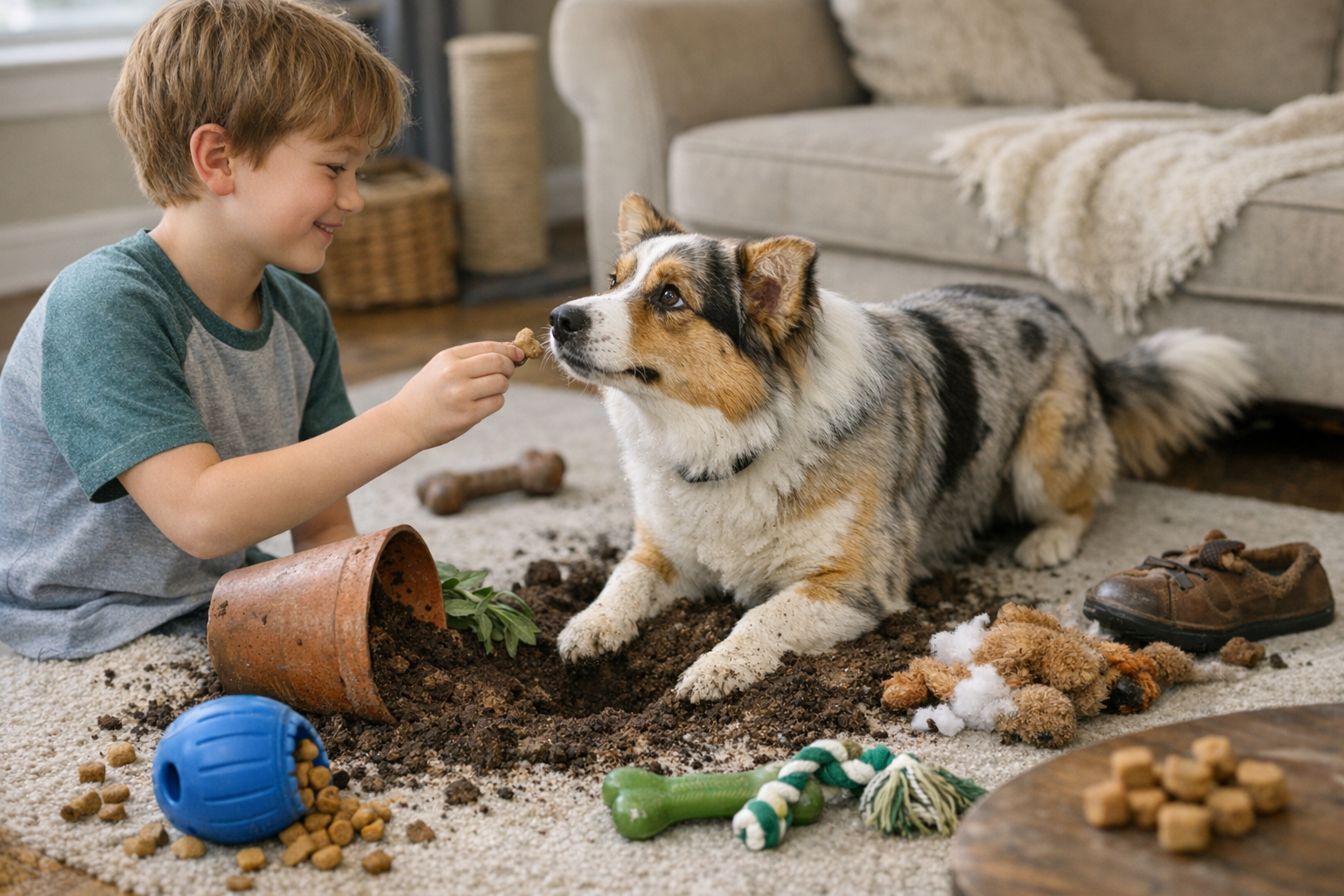
Using Treats to Stop Digging and Destructive Chewing Indoors
If you have a pet who loves to dig or chew on everything in sight, you’re not alone. Many pet parents deal with these common behaviors. Fortunately, using treats can be an effective way to redirect these actions and keep your home safe and tidy.
Why This Topic Matters for Pet Parents
Destructive behaviors like digging and chewing can damage furniture, carpets, and other items in your home. These habits may also indicate boredom, anxiety, or lack of exercise in your pet. Understanding how to manage these behaviors with treats can create a happier home for both you and your furry friend.
Key Insights
- Underlying Causes: Digging and chewing can be signs of boredom or stress.
- Positive Reinforcement: Treats can be used to encourage better behavior.
- Consistency is Crucial: Frequent training sessions yield better results.
- Avoid Punishment: Focus on rewards to create a positive learning experience.
- Physical and Mental Exercise: Engage your pet with activities that tire them out.
Expert Tips
Veterinary experts suggest several strategies for using treats to curb destructive behaviors in pets:
- Identify Triggers: Observe your pet to determine what causes them to dig or chew. This might be specific situations, times of day, or feelings of anxiety.
- Use Treats for Redirection: When your pet starts to dig or chew on something inappropriate, offer them a treat as a distraction. This teaches them what behaviors are accepted.
- Create a Reward System: Keep a list of good behaviors. Reward your pet with treats every time they follow commands or play without engaging in destructive behavior.
- Incorporate Training Sessions: Short and frequent training sessions using treats can reinforce good behavior. For example, teach “leave it” for items they shouldn’t chew.
- Choose Healthy Treats: Select treats that are nutritious and appropriate for your pet’s dietary needs. Consult your veterinarian for recommendations.
Best Products or Treat Types
Here’s a list of treat types that can help manage digging and chewing:
- Chew-Resistant Toys: Provide toys that can withstand chewing and are designed for durability.
- Interactive Treat Dispensers: Toys that release treats as your pet plays can engage their mind and keep them busy.
- Training Treats: Small, low-calorie treats are perfect for quick rewards during training sessions.
- Dental Chews: These not only satisfy chewing urges but also promote oral health.
- Frozen Treats: High-value frozen treats can keep your pet occupied for longer periods of time.
Common Mistakes to Avoid
- Punishing Bad Behavior: Punishment can lead to fear and anxiety, which may worsen digging or chewing.
- Inconsistency: Be consistent with your commands and rewards. Mixed messages can confuse your pet.
- Ignoring Needs: Don’t overlook your pet’s physical and mental needs. Ensure they have enough exercise and stimulation.
- Choosing Wrong Treats: Avoid low-quality treats filled with unhealthy ingredients. Always check labels.
- Overindulgence: Too many treats can lead to weight gain. Use them wisely, especially high-calorie options.
FAQs
1. How can I tell if my pet is bored?
Signs of boredom can include excessive barking, digging, chewing on furniture, or restlessness. If your pet seems uninterested in toys or playtime, they may need more stimulation.
2. What types of treats are best for training?
Small, soft, and low-calorie treats work well for training. Your pet should be able to eat them quickly so they can stay focused on learning.
3. How long should training sessions last?
Keep training sessions short, around 5–10 minutes. Pets have shorter attention spans, and frequent, short sessions can be more effective.
4. Can digging be a sign of anxiety?
Yes, digging can be a coping mechanism for anxious pets. If you suspect anxiety, it’s essential to consult with a veterinarian for guidance.
5. Is it too late to train an adult dog?
No, it’s never too late to train a dog. While puppies may learn more quickly, adult dogs can still learn new behaviors with patience and consistency.
6. Should I always reward my pet for good behavior?
Initially, yes! Use treats to reinforce positive behaviors. Over time, you can gradually reduce treats for some behaviors, allowing for verbal praise or petting instead.
Conclusion
Using treats to manage digging and destructive chewing in pets can be a game-changer. With the right approach, you can redirect your pet’s energy towards positive behaviors. Remember to stay consistent, understand your pet’s needs, and always choose healthy treat options. Happy training!