

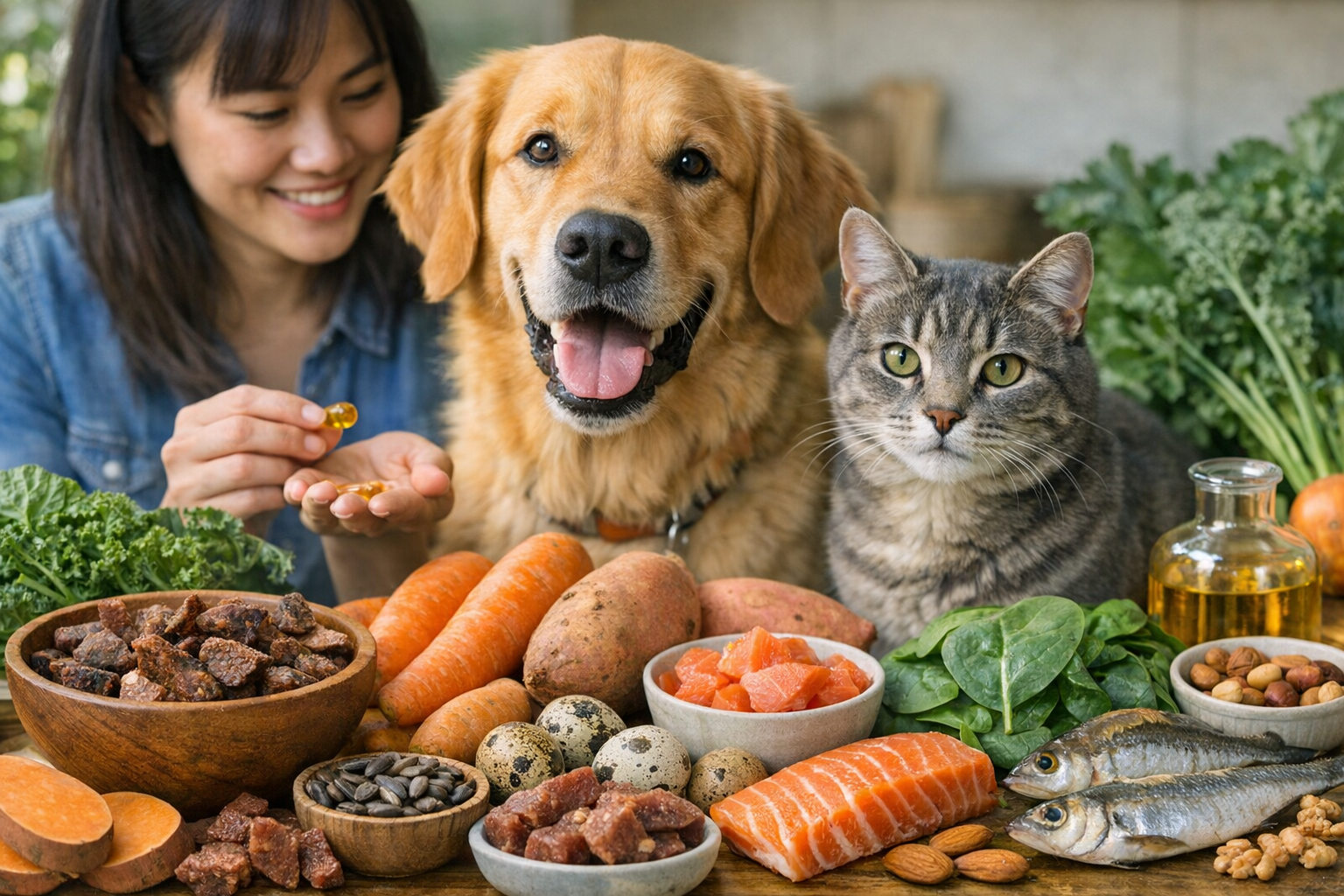
Essential Vitamins (A, D, E, K) and Where to Find Them in Treats
Giving your pets the right vitamins is important for their health. Vitamins A, D, E, and K support many functions in your pet’s body. In this article, we’ll explore where you can find these essential vitamins in treats and why they matter for your furry friends.
Why This Topic Matters for Pet Parents
As a pet parent, keeping your furry friend healthy is a top priority. Vitamins play a big role in overall well-being. They help with growth, immune function, skin health, and more. Understanding where to get these vitamins in their diet, especially from treats, is crucial for maintaining a balanced nutrition plan.
Key Insights
- Vitamin A: Supports vision, skin health, and immune function. Found in beef liver, carrots, and sweet potatoes.
- Vitamin D: Important for bone health and calcium absorption. Present in fish oils and certain fortified foods.
- Vitamin E: Acts as an antioxidant, protecting cells from damage. Available in nuts, seeds, and leafy greens.
- Vitamin K: Essential for blood clotting and bone health. Found in green leafy vegetables and certain fish.
Expert Tips
Veterinarians recommend the following for ensuring your pet gets enough vitamins:
- Choose high-quality treats that list vitamins on the label.
- Incorporate fresh fruits and vegetables into your pet’s diet for natural vitamin sources.
- Consult your veterinarian about adding supplements if your pet has specific health concerns.
- Rotate treats to provide a variety of vitamins. Different treats offer different nutrient profiles.
- Monitor your pet’s overall health and behavior—if something seems off, seek veterinary advice.
Best Products or Treat Types
When looking for treats rich in vitamins A, D, E, and K, consider the following categories:
- Natural Meat Treats: Look for options that contain organ meats, like liver. These are packed with Vitamin A.
- Fish-Based Treats: Salmon or sardine treats are excellent sources of Vitamin D.
- Vegetable Snacks: Treats made from carrots, sweet potatoes, or spinach help provide vitamins A and K.
- Nut or Seed Bites: These often contain Vitamin E and add healthy fats to your pet’s diet.
- Fortified Dog Treats: Some commercial brands add vitamins to their products. Check the ingredient label for listed vitamins.
Common Mistakes to Avoid
Here are some common mistakes pet parents should avoid when it comes to vitamins:
- Assuming a single treat provides all necessary vitamins. It’s important to have a balanced diet.
- Over-supplementing with vitamins without veterinary guidance. This can lead to toxicity and health issues.
- Ignoring the quality of treats. Choose natural options over heavily processed ones.
- Neglecting to check for allergies. Some vitamins in treats can trigger allergies in pets.
- Forgetting to read the nutrition labels carefully. Look for treats that specifically mention the vitamins included.
FAQs
1. How do I know if my pet is getting enough vitamins?
Monitor your pet’s energy levels, coat condition, and overall health. Regular vet check-ups can help assess vitamin levels too.
2. Can I give my pet human vitamins?
Some human vitamins can be toxic to pets. Always consult your vet before giving human supplements to your pet.
3. Are there any signs of vitamin deficiency in pets?
Yes, signs can include poor coat quality, lethargy, weight gain or loss, and immune problems. If you notice these, consult your veterinarian.
4. How often should I give my pet vitamin-rich treats?
Moderation is key. Treats should not exceed 10% of your pet’s daily caloric intake. Incorporate them as part of a balanced diet.
5. What happens if my pet gets too much vitamin A?
Too much Vitamin A can lead to a condition called hypervitaminosis A, which can cause bone problems and skin issues. Always aim for balance.
6. Are there specific breeds that need more vitamins?
Some breeds are predisposed to certain health issues that may require additional vitamins. Consult your vet for tailored advice based on your pet’s breed.
Conclusion
Understanding essential vitamins A, D, E, and K is vital for your pet’s health. These vitamins support numerous bodily functions that are key to their well-being. As a pet parent, providing these essential nutrients through treats and a balanced diet is your best approach. Always consult your veterinarian about any specific dietary needs or concerns to help ensure your furry friend lives a long and healthy life.