
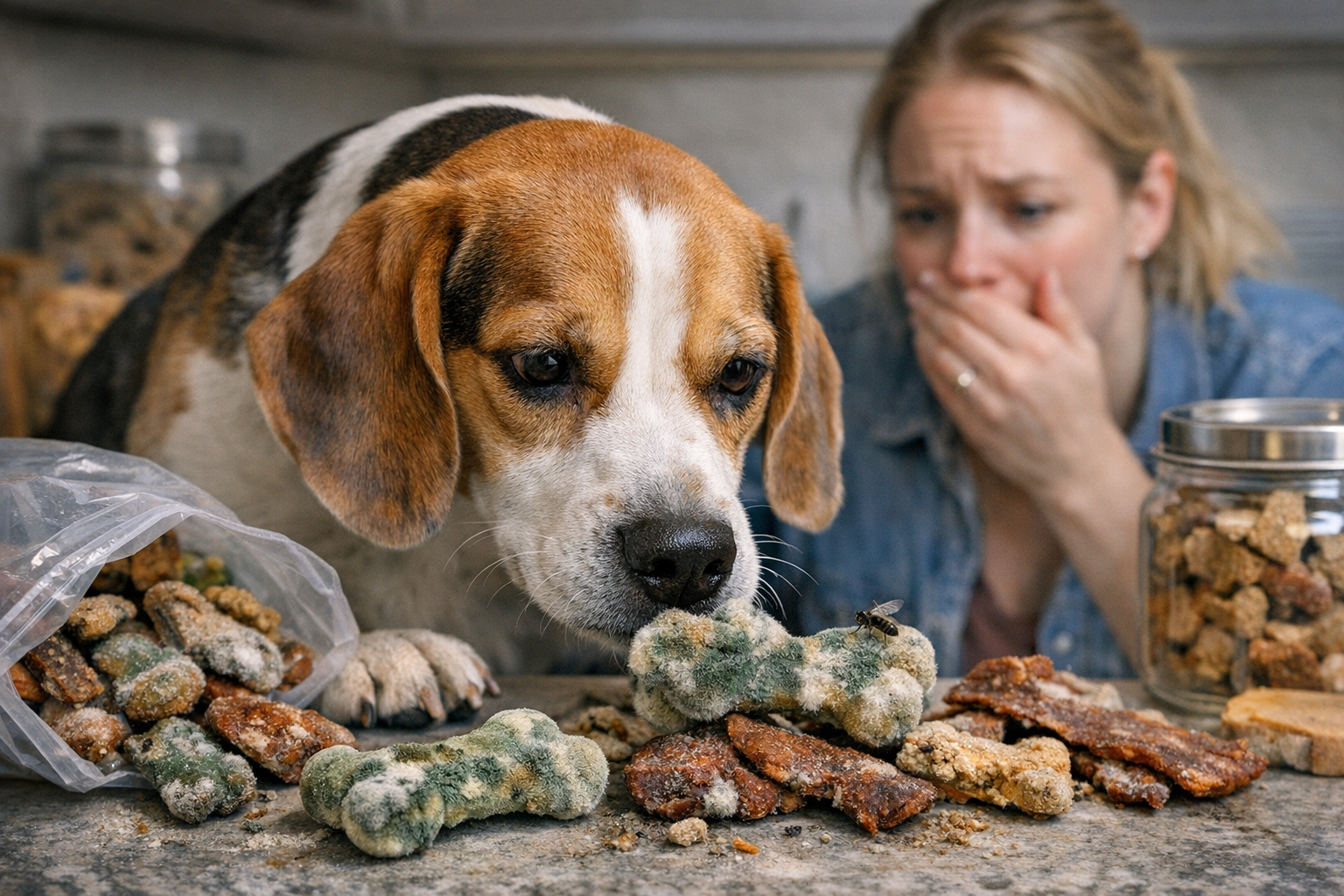
The Danger of Mold and Bacteria in Improperly Stored Pet Treats
Improperly stored pet treats can lead to serious health risks for our furry friends. Mold and bacteria can grow on treats that are not kept in the right conditions, potentially causing illness. Pet parents must understand these dangers to keep their pets safe.
Why This Topic Matters for Pet Parents
It’s important for pet owners to be aware of how to store pet treats properly. Many pet treats are susceptible to mold and bacteria that can harm your pet’s health. Knowing how these harmful substances can affect your pet helps you make better decisions about their food and treats.
Key Insights
- Mold Growth: Mold thrives in warm, humid conditions. Treats stored in unsuitable environments can quickly grow mold.
- Bacterial Contamination: Bacteria, such as Salmonella, can contaminate treats if they’re not stored properly.
- Health Risks: Pets can suffer from gastrointestinal issues, infections, and other health problems if they consume spoiled treats.
- Signs of Spoilage: Look for changes in smell, texture, or color when checking your pet treats.
Expert Tips
To ensure your pet treats remain safe, consider the following recommendations from veterinarians:
- Store in a Cool, Dry Place: Keep treats in a cool and dry environment to minimize moisture.
- Use Airtight Containers: Store opened treats in airtight containers to prevent exposure to air and humidity.
- Follow Expiration Dates: Always check expiration dates and discard any expired treats immediately.
- Buy in Small Quantities: Purchase smaller amounts of treats to reduce the chances of spoilage.
- Regularly Inspect Treats: Check pet treats regularly for any signs of mold or spoilage.
Best Products or Treat Types
Choosing the right type of pet treats can also play a role in minimizing health risks:
- Dehydrated Treats: These treats have low moisture levels, reducing the likelihood of mold.
- Freeze-Dried Treats: These treats are vacuum-sealed to keep them fresh while eliminating moisture.
- Natural Treats: Look for products with few ingredients that are less likely to spoil.
- Homemade Treats: If you make treats at home, you can control ingredients and storage.
Common Mistakes to Avoid
To keep your pet safe, avoid these common storage mistakes:
- Leaving Treats in Open Bags: Always re-seal bags or transfer to containers after opening.
- Storing in Warm Areas: Avoid places with high temperatures, like next to stoves or in sunny spots.
- Ignoring Signs of Spoilage: Don’t overlook changes in treats. If they smell off or look different, toss them.
- Buying Bulk Treats: Large quantities can go bad before your pet finishes them. Purchase smaller amounts.
FAQs
- How can I tell if pet treats are spoiled? Look for mold, strange smells, or changes in texture. When in doubt, throw them out.
- Can bacteria from pet treats affect humans? Yes, some bacteria, like Salmonella, can transfer from pet treats to humans. Always wash your hands after handling.
- What are the safest storage methods for pet treats? Use airtight containers and store treats in a cool, dry place away from sunlight.
- Is it safe to give my pet homemade treats? Yes, as long as you store them properly and use safe ingredients.
- How long do pet treats typically last? Most commercially produced treats have a shelf life indicated on the package, usually ranging from 6 months to 1 year.
Conclusion
Understanding the dangers of mold and bacteria in improperly stored pet treats is essential for all pet parents. By following expert recommendations, choosing the right treats, and avoiding common mistakes, you can keep your furry companions healthy and safe. Always prioritize safe storage practices to ensure every treat is a delightful experience for your pet.