
The Best Treats for Cats with Feline Herpes Virus (L-Lysine Supplementation)
Feline Herpes Virus (FHV-1) is a common condition in cats, leading to respiratory issues and eye problems. Treating affected cats with proper nutrition and supplements is essential. This article explores the best treats and L-Lysine supplementation to keep your cat healthy and happy.
Why This Topic Matters for Pet Parents
Understanding feline herpes virus and its impact on your cat’s health is vital for any pet parent. Cats with FHV-1 may not only suffer physically but can also show behavioral changes. Providing the right support through diet and treats can:
- Boost their immune system.
- Help manage symptoms.
- Improve overall well-being.
Key Insights
Introducing L-Lysine and choosing the right treats can make a significant difference for cats with FHV-1. Here are some key insights:
- What is L-Lysine? – An essential amino acid that helps reduce the severity and frequency of herpes virus outbreaks.
- Benefits:
- Supports the immune system.
- Decreases viral replication.
- Helps alleviate symptoms like sneezing and nasal discharge.
- Types of Treats:
- Treats fortified with L-Lysine.
- High-quality protein snacks.
- Hydration treats to promote fluid intake.
Expert Tips
Here are some veterinarian-style recommendations for choosing treats for your cat:
- Consult Your Vet: Always discuss your cat’s health and diet with a veterinarian, especially when considering L-Lysine supplementation.
- Daily Dosage: A typical L-Lysine dose for cats is 250-500 mg per day. Check with your vet for specific recommendations based on your cat’s weight and health.
- Watch for Allergies: Introduce new treats gradually and observe for any adverse reactions.
- Maintain Hydration: Encourage fluid intake, especially if your cat has a respiratory virus. Look for moist treats or supplemental broths.
- Don’t Overdo It: Treats should not exceed 10% of your cat’s daily caloric intake to maintain a balanced diet.
Best Products or Treat Types
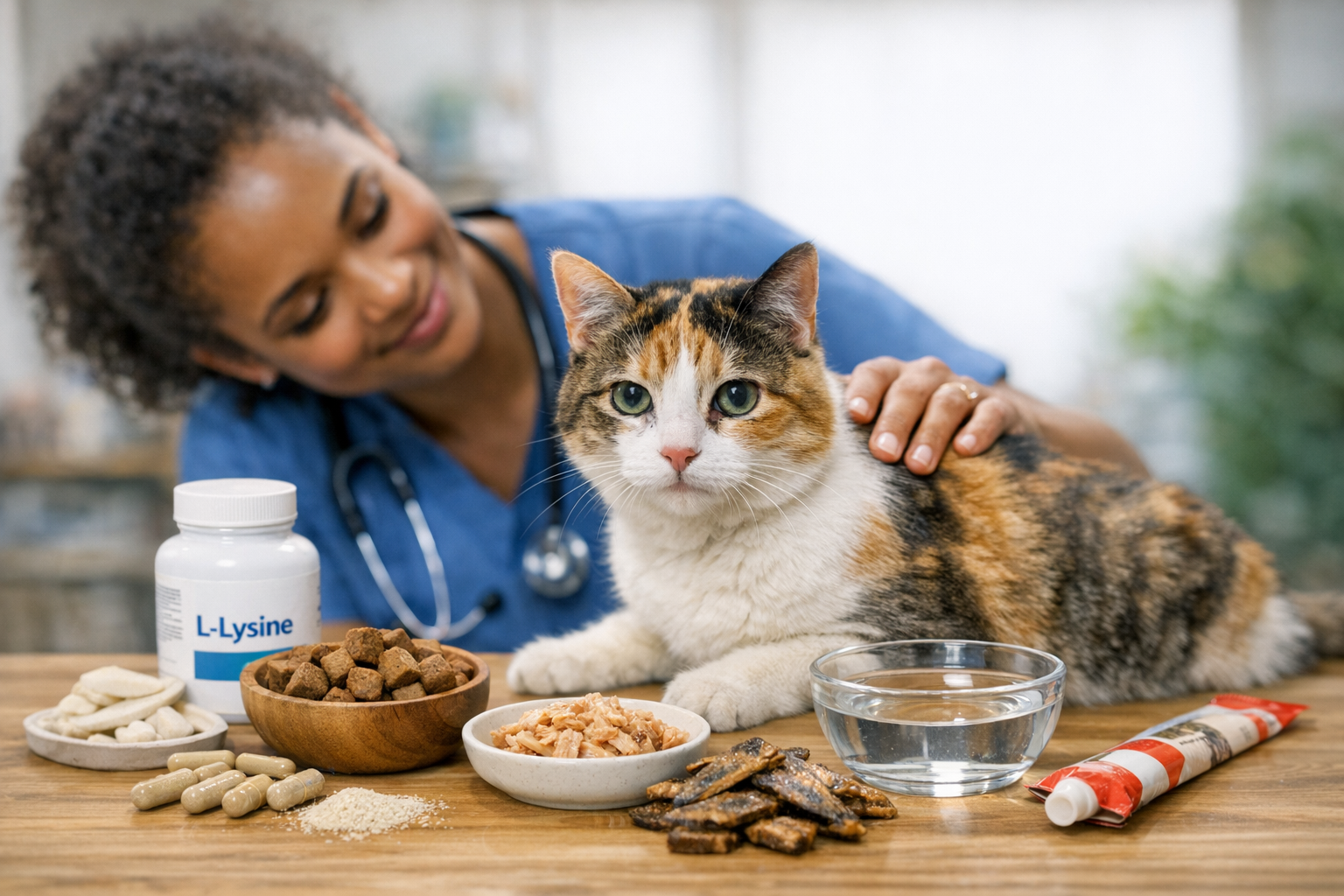
When choosing treats for cats with FHV-1, consider the following types:
- L-Lysine Chews: Look for treats specifically formulated with added L-Lysine.
- Veterinary-Recommended Treats: Products often created with health in mind; ask your vet for suggestions.
- Protein-Rich Snacks: Treats made from chicken, fish, or turkey, as these are appetizing and healthy.
- Hydration Treats: Water-infused options can help when your cat struggles with a stuffy nose.
- Homemade Treats: Consider making your own using L-Lysine powder, ensuring it meets your cat’s dietary needs.
Common Mistakes to Avoid
Many pet parents make these common mistakes:
- Ignoring Professional Advice: Always consult your veterinarian before changing your cat’s diet.
- Over-supplementation: Too much L-Lysine can cause gastrointestinal upset; stick to recommended dosages.
- Choosing Low-Quality Treats: Avoid treats with fillers or artificial ingredients that offer no health benefits.
- Neglecting Hydration: Ensure your cat drinks enough water, especially when they are unwell.
- Disregarding Cat’s Preferences: Know your cat’s taste! Treats have to be appealing for them to be effective.
FAQs
1. What is feline herpes virus?
Feline herpes virus (FHV-1) is a common viral infection in cats that affects the respiratory system and can cause symptoms such as sneezing, eye discharge, and nasal congestion.
2. How can L-Lysine help my cat?
L-Lysine can reduce the severity and frequency of herpes outbreaks in cats, boosting their immune system and helping manage cold-like symptoms.
3. Can I give L-Lysine to my healthy cat?
While L-Lysine is generally safe, it’s best to consult your veterinarian first to determine if supplementation is necessary.
4. How do I know if my cat has FHV-1?
If your cat shows symptoms like sneezing, coughing, nasal discharge, or watery eyes, consult your veterinarian for a proper diagnosis.
5. Are there any side effects of L-Lysine?
Some cats may experience gastrointestinal upset or diarrhea if they receive too much L-Lysine. Stick to the recommended dosage to avoid issues.
6. How can I tell if a treat is good for my cat?
Look for treats that provide health benefits, are recommended by veterinarians, and contain high-quality ingredients without artificial additives.
Conclusion
Choosing the right treats for cats with Feline Herpes Virus is crucial for their health and happiness. L-Lysine supplementation can support their immune system and help manage symptoms effectively. Always consult your veterinarian to create a tailored approach that works best for your fur baby. With the right information and products, you can help your cat live a healthier, happier life despite their condition.