
The Best Treatments for Dog Anxiety: Calming Treats vs. Medication
Dog anxiety can be a real challenge for both pets and their owners. Understanding the best treatments can help your furry friend feel more relaxed and secure. In this article, we will explore the options available, including calming treats and medications, and how to choose what’s best for your dog.
Why This Topic Matters for Pet Parents
Dog anxiety can affect any breed and any age. When dogs feel anxious, it can lead to behavioral issues like barking, chewing, or even aggression. Understanding how to manage anxiety is crucial for the well-being of your pet and your family.
- Improves quality of life for pets.
- Helps maintain peace in the household.
- Reduces the risk of destructive behavior.
Key Insights
- Dog anxiety can stem from various sources including separation, loud noises, or new environments.
- Calming treats are often made with natural ingredients like chamomile and valerian root.
- Prescription medication may be necessary for severe anxiety but should be used under a vet’s guidance.
- Consistency in treatment is key for long-term success.
- Combining techniques, like behavior training with treats or medication, often yields the best results.
Expert Tips
When considering how to manage your dog’s anxiety, veterinarians recommend the following:
- Consult Your Vet: Always talk to your veterinarian to rule out any health issues first.
- Choose Quality Treats: Look for treats with known calming ingredients.
- Monitor Dosage: Follow recommended dosages, especially with calming treats and medications.
- Implement Training: Use positive reinforcement training to help improve your dog’s confidence.
- Create a Safe Space: Provide a quiet, comfortable area for your dog to retreat to when anxious.
Best Products or Treat Types
When it comes to calming your anxious pup, here are some of the best types of products to consider:
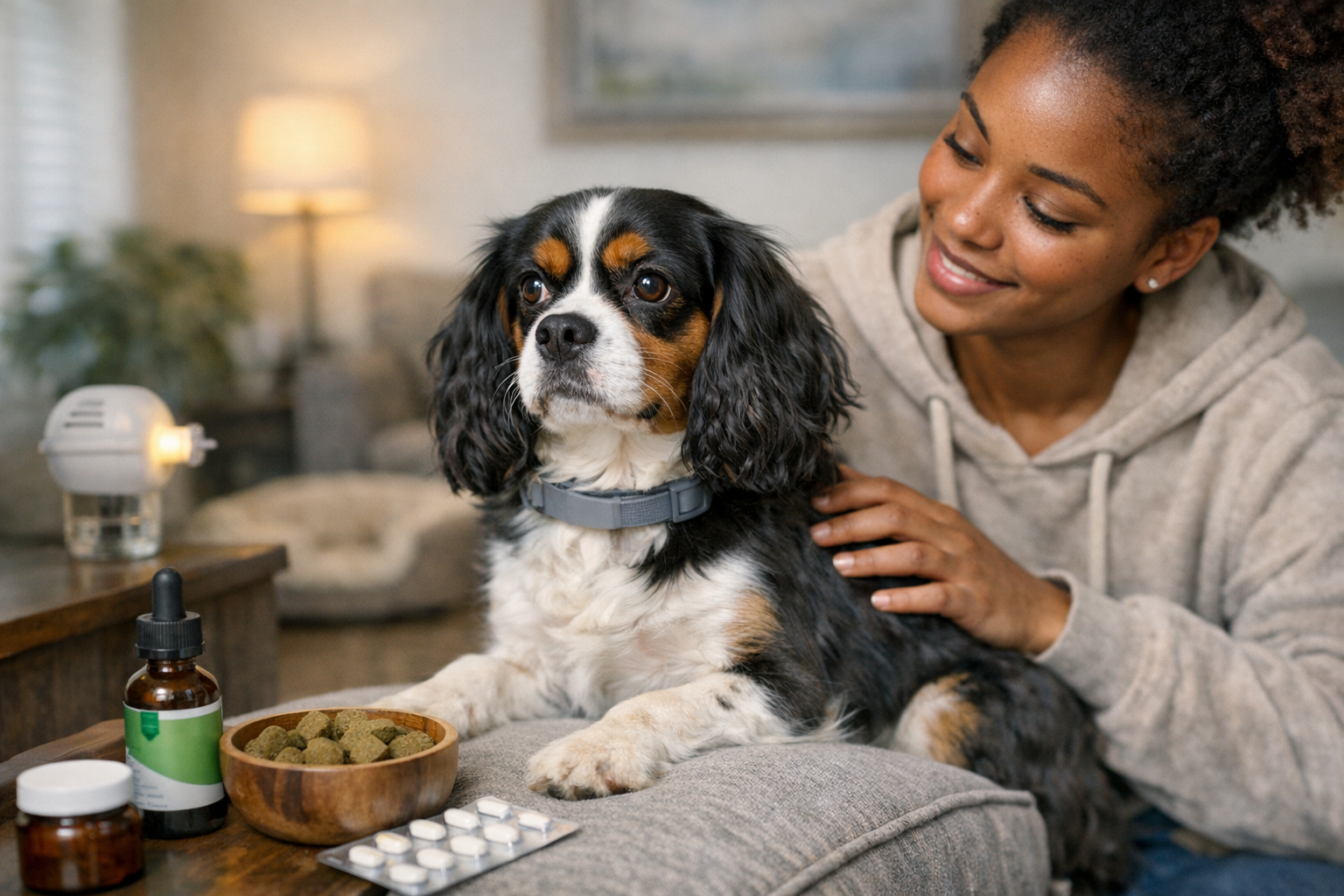
- Natural Calming Treats: Look for treats with ingredients like chamomile, L-theanine, ginger, and CBD oil.
- Chews or Soft Treats: Soft treats are often more palatable for picky eaters.
- Calming Collars: These collars release soothing pheromones to help ease anxiety.
- Adaptil Diffusers: Provides a constant supply of calming pheromones in your home.
- Prescription Anxiety Medications: For severe cases, your vet might recommend medications like fluoxetine or sertraline.
Common Mistakes to Avoid
Here are some pitfalls to steer clear of when addressing your dog’s anxiety:
- Ignoring the Signs: Don’t overlook behaviors that indicate anxiety, like excessive barking or hiding.
- Self-Medicating: Avoid giving human medications to dogs; always consult a vet first.
- Inconsistent Treatment: Stick to a routine for the best results; inconsistency can worsen anxiety.
- Neglecting Training: Don’t rely solely on treats or medication; training is essential too.
- Overlooking the Environment: Make sure your dog’s living space is calm and safe.
FAQs
- Q: How do I know if my dog has anxiety?
A: Signs include barking, chewing, trembling, and hiding. It’s best to consult your vet if you notice these behaviors. - Q: Are calming treats effective?
A: Many pet parents find calming treats helpful, especially when combined with training and environmental adjustments. - Q: Is medication safe for my dog?
A: Prescription medications are safe when used as directed by your veterinarian. - Q: Can I give my dog human anxiety medication?
A: No, human medications can be harmful to dogs. Always consult a vet before giving any medication. - Q: How long does it take for calming treats to work?
A: Most calming treats may take about 30 minutes to an hour to take effect, but results can vary by product.
Conclusion
Managing dog anxiety can be a journey, but with the right approach, you can help your furry friend feel more secure. Whether you choose calming treats, medication, training, or a combination of these techniques, it’s essential to consult with your veterinarian. Remember that patience and consistency are key to helping your dog overcome anxiety. With love and support, you can create an environment that fosters calmness and happiness for both you and your pet.