
How Diet and Treats Can Affect Your Dog’s Urine pH Level
Understanding how your dog’s diet affects their urine pH is crucial for your pet’s health. Certain foods and treats can alter the acidity or alkalinity of your dog’s urine. This can lead to various health issues, including urinary infections and kidney problems. Knowing how to balance their diet can help keep your pup happy and healthy.
Why This Topic Matters for Pet Parents
As a pet parent, you want the best for your furry friend. The pH level of your dog’s urine can influence their overall health. Here are a few reasons why this topic is important:
- Urinary health: Imbalanced pH can lead to infections or stone formation.
- Dietary control: Understanding pH helps in choosing the right foods.
- Prevention: Maintaining a healthy pH can prevent serious health issues.
Key Insights
Here are some important points to understand about your dog’s urine pH:
- Normal urine pH for dogs ranges from 5.5 to 7.0.
- High protein diets may increase urine acidity.
- Plant-based diets tend to make urine more alkaline.
- Hydration affects urine concentration and acidity.
- Certain medical conditions can also influence urine pH.
Expert Tips
Veterinarians recommend keeping a close eye on your dog’s diet. Here are some useful tips:
- Monitor what they eat: Keep track of the ingredients in your dog’s food and treats.
- Hydration is key: Always provide fresh water to help dilute urine.
- Regular vet check-ups: Schedule routine exams to check urine and overall health.
- Consider food types: Choose balanced dog food that supports optimal urine pH.
- Be cautious with homemade diets: Consult a vet for recipes that meet nutritional needs.
Best Products or Treat Types
When selecting treats and foods for your dog, consider the following types:
- High-quality dog kibble: Look for brands that specify balanced nutrients.
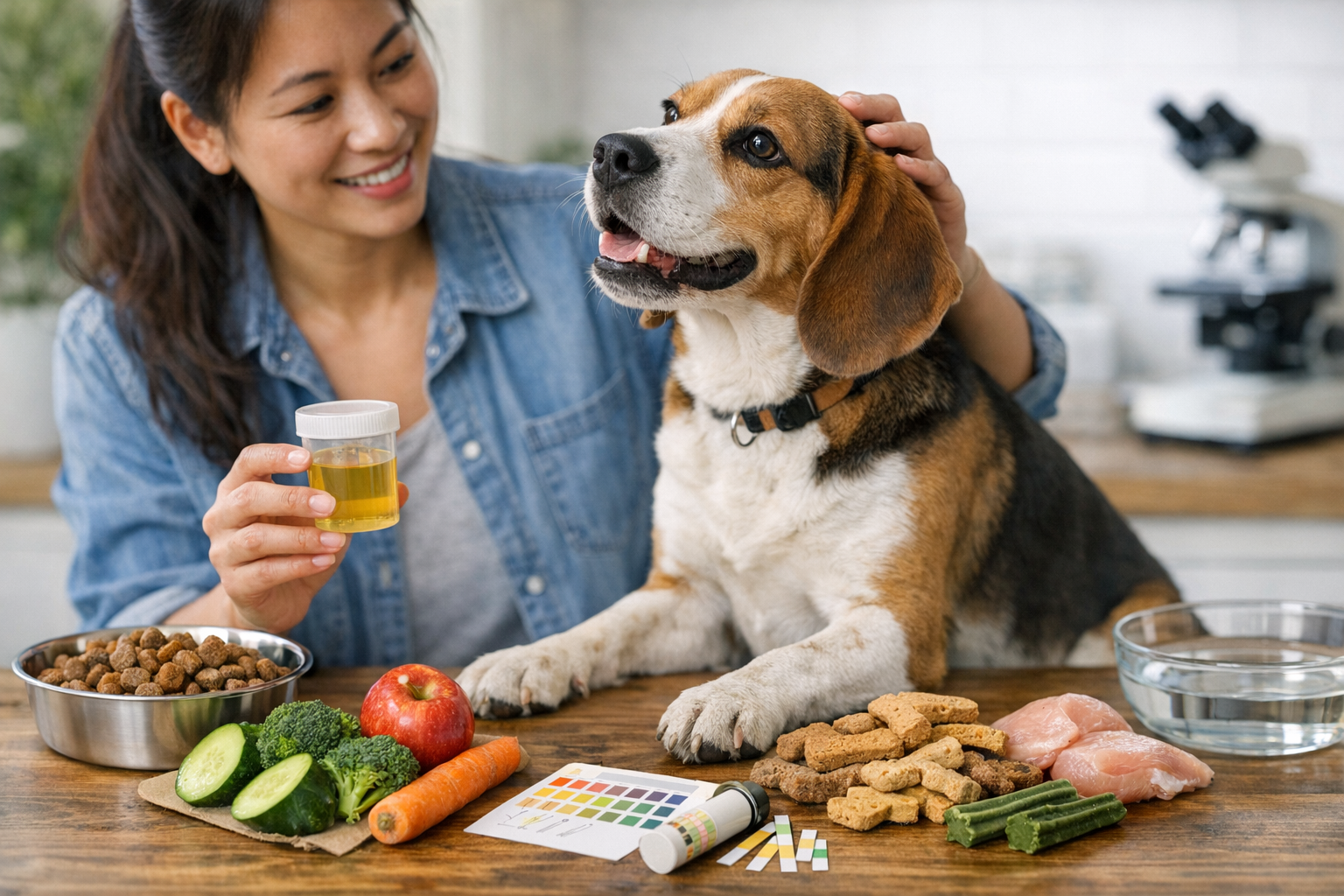
- Fresh fruits and vegetables: Low in protein; help to maintain a healthy pH.
- Low-protein treats: Encourage treats that are grain-based or vegetable-based.
- Dental chews: Some can help manage pH levels while supporting oral health.
Common Mistakes to Avoid
Many pet owners make simple mistakes that can affect their dog’s urine pH. Here are some to avoid:
- Ignoring water intake: Lack of water can lead to concentrated urine and increased acidity.
- Overfeeding treats: Too many high-protein treats can create imbalances.
- Not adjusting diet with age: Nutritional needs change as dogs age.
- Using human food: Many human foods are unsuitable and can affect pH.
FAQs
1. What is urine pH, and why is it important?
Urine pH measures how acidic or alkaline a dog’s urine is. It is important because it affects kidney function and can indicate potential health issues.
2. How can I check my dog’s urine pH?
Veterinarians can test urine pH during regular check-ups. There are also pH test strips available for home use.
3. What should I do if my dog’s urine pH is too high or too low?
If your dog’s urine pH is abnormal, consult your veterinarian. They may recommend dietary changes or other tests.
4. Can certain dog breeds be more affected by urine pH levels?
Yes, certain breeds may be more prone to urinary issues, so they may require special diets to maintain a healthy pH.
5. Are there specific foods that I should avoid for my dog?
Avoid high-protein foods designed for cats and human foods that are toxic, like onions or grapes, as they can heavily affect urine pH.
6. How can treats help with my dog’s urine pH?
Choosing the right treats can help maintain a healthy balance of nutrients and pH levels, potentially preventing urinary tract issues.
Conclusion
Understanding how your dog’s diet impacts their urine pH is vital for their overall health. By choosing the right foods and treats, staying mindful of their hydration, and avoiding common pitfalls, you can help maintain a healthy pH balance for your furry friend. Regular check-ups with your vet will further ensure your dog remains happy and healthy for years to come.