
The Safest Chews for Dogs with Braces or Dental Wire
Choosing the right chews for dogs with braces or dental wire is crucial for their oral health. These pets can be sensitive to traditional chews, making it important to select options that won’t harm their dental work. This article covers why this topic matters, highlights key insights, offers veterinarian recommendations, lists safe product types, discusses common mistakes to avoid, and answers frequently asked questions.
Why This Topic Matters for Pet Parents
Dogs with braces or dental wire need special care when it comes to their chews. Using the wrong types of treats can lead to damaged dental work, discomfort, or even more serious oral health issues. Pet parents must choose chews that protect their dog’s teeth and gums while still supporting their chewing instincts. Understanding this topic helps ensure the well-being and happiness of your furry friend.
Key Insights
- Dental braces and wires can be fragile and require special care.
- Chewing on hard or abrasive items can cause damage to dental hardware.
- Soft or flexible chews are generally safer for dogs with orthodontics.
- Monitor chewing habits to ensure your dog is comfortable and not in pain.
- Always consult with your veterinarian for tailored recommendations.
Expert Tips
Here are some recommendations from veterinarians on picking safe chews:
- Consult the vet: Always ask your veterinarian before introducing new chews to your dog’s diet.
- Choose softer treats: Opt for chews made from rubber or soft materials that won’t harm braces.
- Observe your dog’s reaction: Watch for signs of discomfort while chewing, like whining or pawing at their mouth.
- Regular dental check-ups: Schedule periodic vet visits to monitor your dog’s oral health, especially after getting braces.
- Frozen treats: Consider using frozen soft treats for soothing gums and encouraging chewing that is safe.
Best Products or Treat Types
Here is a list of safe chew types for dogs with braces or dental wire:
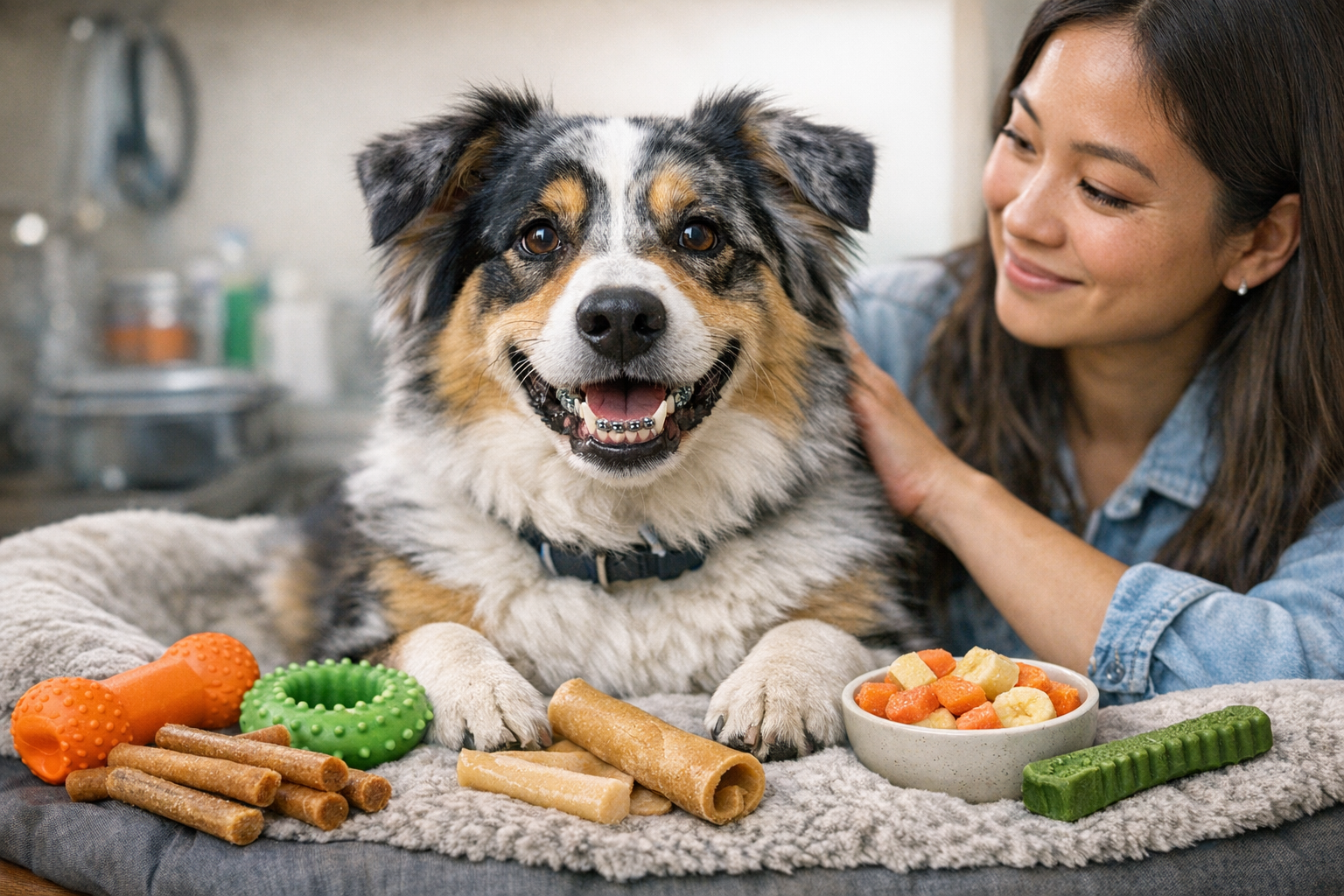
- Soft rubber toys: These provide a satisfying chew without risking damage.
- Dental chews: Specifically designed to clean teeth gently while being soft enough for orthodontics.
- Rawhide alternatives: Look for soft, compressed options that are gentler on teeth.
- Chewy, soft treats: Soft biscuits or training treats that your dog can easily chew and digest.
- Frozen fruits or veggies: Small pieces of soft, frozen treats like bananas or carrots can be good options.
Common Mistakes to Avoid
Pet parents should avoid these common mistakes when choosing chews:
- Ignoring texture: Hard or crunchy treats can damage braces or dental wire.
- Not monitoring chewing time: Allowing too long of a chewing session can lead to discomfort or injury.
- Choosing the wrong size: Treats that are too small can be swallowed whole, while large ones can cause stress on dental work.
- Assuming all natural chews are safe: Some natural chews can still be too hard for dogs with braces.
- Disregarding dental advice: Always follow the vet’s guidance on what’s appropriate for your dog’s dental health.
FAQs
1. Can all dogs eat dental chews?
Not all dental chews are safe for dogs with braces. Always consult your veterinarian before introducing new chews.
2. How can I tell if my dog is in pain while chewing?
Watch for signs like whining, pawing at their mouth, or refusing to chew. If you observe these behaviors, stop giving that chew and consult your vet.
3. Are there any homemade treats I can give?
Yes! You can create soft treats at home using ingredients like pumpkin, oats, and peanut butter, ensuring they’re easy to chew.
4. How often should I check my dog’s braces?
Regular check-ups with your veterinarian are essential, especially right after getting braces. Follow your vet’s advice for frequency and monitoring.
5. What can happen if my dog chews on the wrong type of treat?
Chewing inappropriate items can lead to damaged braces, broken teeth, gums injury, or even infections.
Conclusion
Providing the right chews for dogs with braces or dental wire is essential for their oral health and overall happiness. By choosing softer treats and monitoring their chewing habits, pet parents can protect their furry companions from discomfort and maintain their dental work. Always consult your veterinarian for tailored advice, so your dog can continue to enjoy their chewing time safely!