

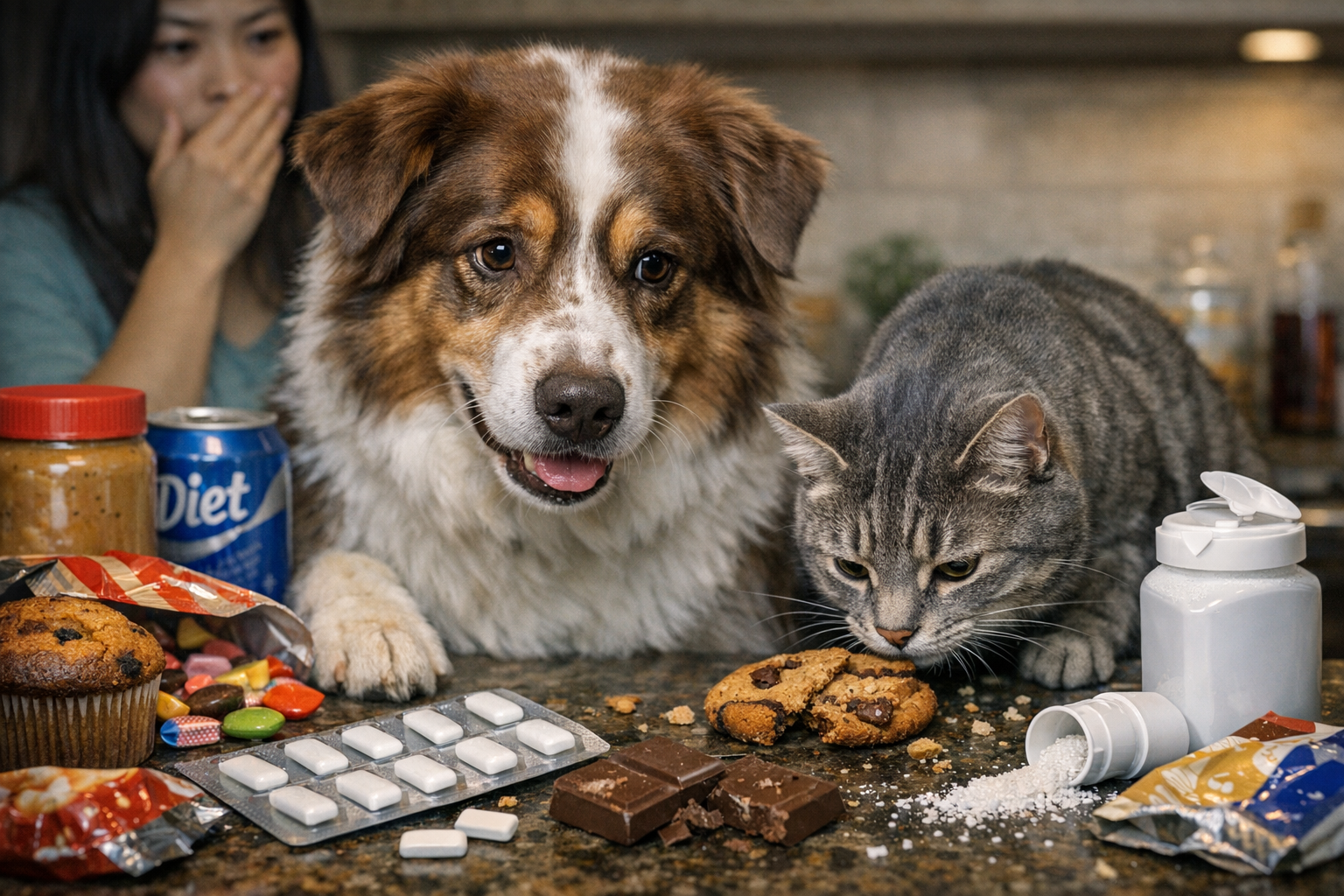
The Impact of Artificial Sweeteners (Not just Xylitol) on Pet Health
Artificial sweeteners are often found in our foods and drinks, but they can also end up in products meant for our pets. Understanding the effects these sweeteners have on pet health is crucial for every pet owner. This article will explore various artificial sweeteners and their potential risks to our fuzzy companions.
Why This Topic Matters for Pet Parents
As pet parents, we want the best for our furry friends. Artificial sweeteners can appear in pet treats, foods, and even human snacks that pets might ingest. Knowing which sweeteners are safe and which are not can help you make better choices for your pet’s health.
Key Insights
- Xylitol: Extremely toxic to dogs. Even small amounts can cause serious health issues.
- Other Sweeteners: Sweeteners like aspartame, sucralose, and saccharin can also pose risks, although research is limited.
- Symptoms of Toxicity: Signs of artificial sweetener poisoning include vomiting, lethargy, seizures, and in severe cases, death.
- Ingestion Situations: Pets may consume artificial sweeteners from human food, packaging, or contaminated pet treats.
- Alternatives: There are safe, natural alternatives to sweeteners that you can use in treats.
Expert Tips
Here are some tips from veterinarians to keep your pets safe from harmful sweeteners:
- Read Labels: Always check the ingredient list on pet food and treats.
- Watch What You Share: Avoid giving your pets human food that contains artificial sweeteners.
- Educate Yourself: Learn about the common types of artificial sweeteners and their effects on pets.
- Remove Temptations: Keep any food containing sweeteners out of your pet’s reach.
- Consult Your Vet: If you suspect your pet has ingested something harmful, contact your veterinarian immediately.
Best Products or Treat Types
When seeking healthy treats for your pets, consider the following options:
- Natural Jerky Treats: Look for treats made with real meat and no added sugars.
- Freeze-Dried Fruits: Some fruits are safe for pets and provide natural sweetness without additives.
- Vegetable Snacks: Carrots, sweet potatoes, and green beans can be great crunchy alternatives.
- Homemade Treats: Prepare your own pet treats using safe ingredients like peanut butter (without added sugars) or pumpkin.
Common Mistakes to Avoid
Here are some common errors pet owners make regarding artificial sweeteners:
- Not Reading Labels: Failing to check for artificial sweeteners in pet food and treats.
- Assuming All Sweeteners Are Safe: Believing that if one is safe, others are too, without doing research.
- Sharing Your Food: Feeding pets your snacks, assuming they are harmless.
- Ignoring Symptoms: Not taking signs of poisoning seriously and delaying veterinary care.
- Not Consulting a Vet: Dismissing advice or treatment from professionals that may help safeguard your pet’s health.
FAQs
1. What should I do if my pet ingests a product containing xylitol?
If you suspect your pet has eaten something containing xylitol, contact your veterinarian or an animal poison control hotline immediately.
2. Are there any sweeteners that are safe for pets?
Some natural sweeteners like honey are generally safe in small amounts for dogs. However, always consult your veterinarian before introducing any new foods.
3. Can cats eat foods with artificial sweeteners?
Most artificial sweeteners are not recommended for cats, and similar to dogs, xylitol can be harmful. Always check with your vet before giving your cat new treats.
4. How can I make my own pet treats without artificial sweeteners?
Use simple ingredients like whole grains, eggs, fruits, and vegetables. There are many recipes available online for homemade pet treats that are safe and healthy.
5. What signs should I look for if I think my pet may have eaten artificial sweeteners?
Signs of toxicity can include vomiting, loss of coordination, lethargy, or seizures. If you observe any of these symptoms, seek veterinary care immediately.
6. Can artificial sweeteners cause long-term health issues in pets?
While more research is needed, certain artificial sweeteners have been linked to digestive issues and other health concerns in pets. It’s best to avoid them altogether.
Conclusion
Artificial sweeteners can have serious implications for your pet’s health. While xylitol is the most well-known offender, other sweeteners can also pose risks. By educating yourself, carefully reading labels, and making wise choices about your pet’s diet, you can help ensure a long, healthy life for your furry family members. Always consult with your veterinarian for the best advice on pet nutrition and safety.