

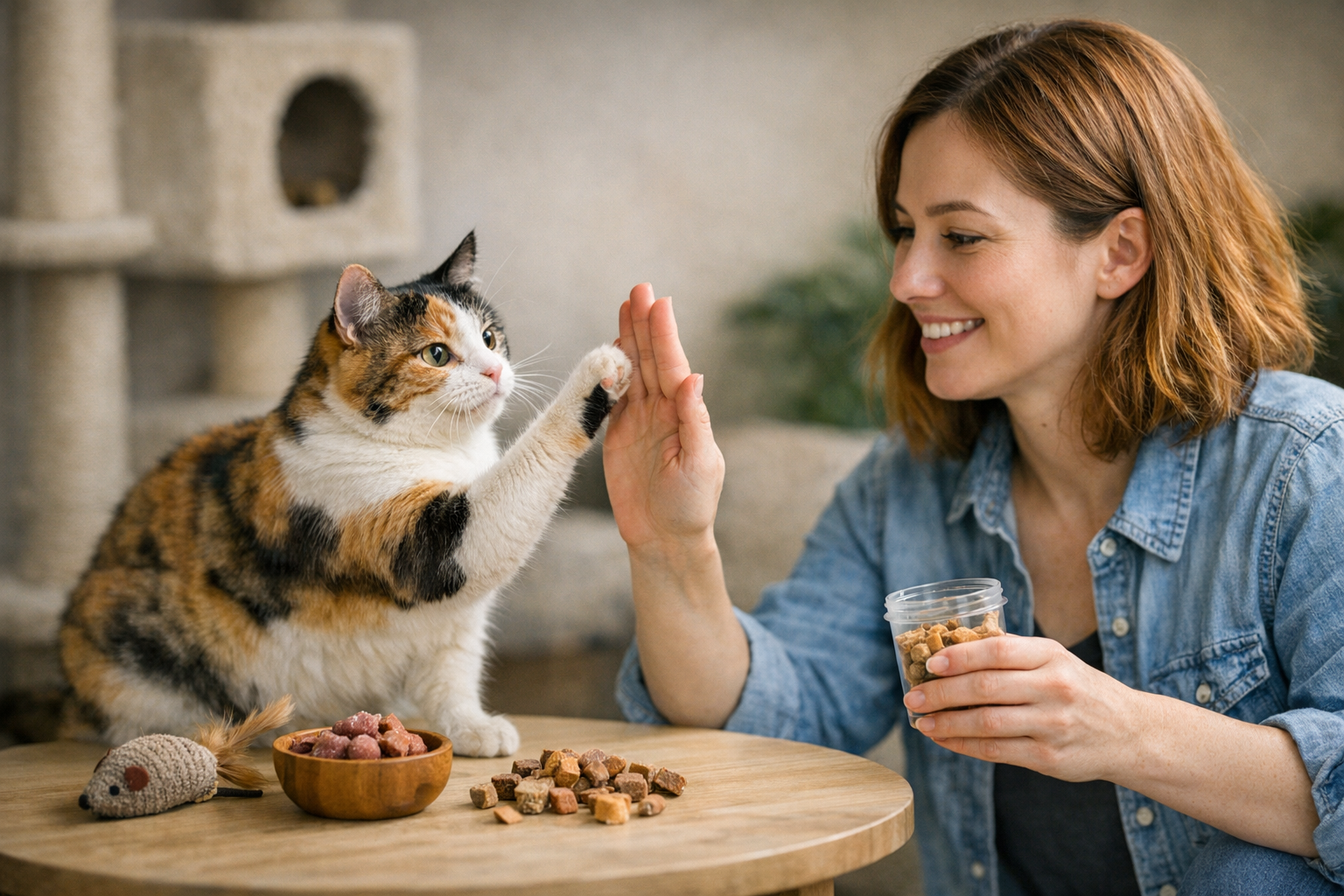
Training Your Cat: Yes, It’s Possible! (Using Specialized Treats)
Many cat owners believe that training is reserved for dogs, but that’s not true! With the right approach and specialized treats, you can train your cat effectively. This article explores why training your cat is important and how to use special treats to make the process enjoyable for both of you.
Why This Topic Matters for Pet Parents
Understanding how to train your cat is essential for nurturing a positive relationship. It can lead to better behavior and a more harmonious home. Here are some reasons why training is important:
- Improves cat’s social skills.
- Enhances safety by teaching commands.
- Reduces unwanted behaviors, like scratching furniture.
- Strengthens the bond between you and your cat.
Key Insights
Training your cat might seem daunting, but it can be simple and effective. Here are some key insights:
- Use positive reinforcement, like treats, to encourage good behavior.
- Short, consistent training sessions work best – aim for 5-10 minutes.
- Patience is essential; every cat learns at a different pace.
- Focus on one command or trick at a time.
Expert Tips
Veterinarians emphasize the importance of rewarding your cat during training. Here are some expert recommendations:
- Choose treats that your cat loves. High-value treats, like freeze-dried meat, can be very motivating.
- Start training in a quiet space with few distractions.
- Be consistent with commands; always use the same word for the same action.
- End training sessions on a positive note, even if it means giving a treat without completing the command.
Best Products or Treat Types
When training your cat, the right treats can make all the difference. Here are some of the best types of treats to use:
- Soft, chewy treats: Cats often find these appealing and can eat them quickly.
- Freeze-dried treats: These are usually high in protein and lightweight, making them easy to carry.
- Treats with catnip: Many cats are motivated by catnip, making it a great addition to training treats.
- Homemade treats: You can make simple, healthy treats at home using chicken, tuna, or pumpkin.
Common Mistakes to Avoid
Training can be frustrating if mistakes are made. Here are some pitfalls to steer clear of:
- Using the wrong types of treats that don’t excite your cat.
- Training for too long, which can lead to boredom or frustration.
- Being inconsistent with commands and rules.
- Not rewarding your cat promptly, which can confuse them about what they are being rewarded for.
FAQs
1. Can all cats be trained?
Yes! Most cats can learn basic commands and tricks, though some may take longer than others.
2. How long does it take to train a cat?
Training success varies by cat. Some may learn a command in a few days, while others may take weeks.
3. What are good commands to start with?
Start with simple commands like “sit,” “come,” and “high five.” These are enjoyable and easy for cats to learn.
4. Is it better to train a kitten or an adult cat?
Both can be trained, but kittens are often more adaptable to new behaviors. However, adult cats can learn just as well with patience.
5. How often should I train my cat?
Short, regular training sessions of 5-10 minutes a few times a week are most effective.
6. Can I use food from their normal diet as treats?
While you can use their regular kibble, it’s often best to use special treats that they love for effective training.
Conclusion
Training your cat is not only possible but can also be fun and rewarding. By using specialized treats and following expert tips, you can teach your cat desirable behaviors and strengthen your bond. Remember, patience and consistency are key components to successful training. Your furry friend could be the next star pupil!