

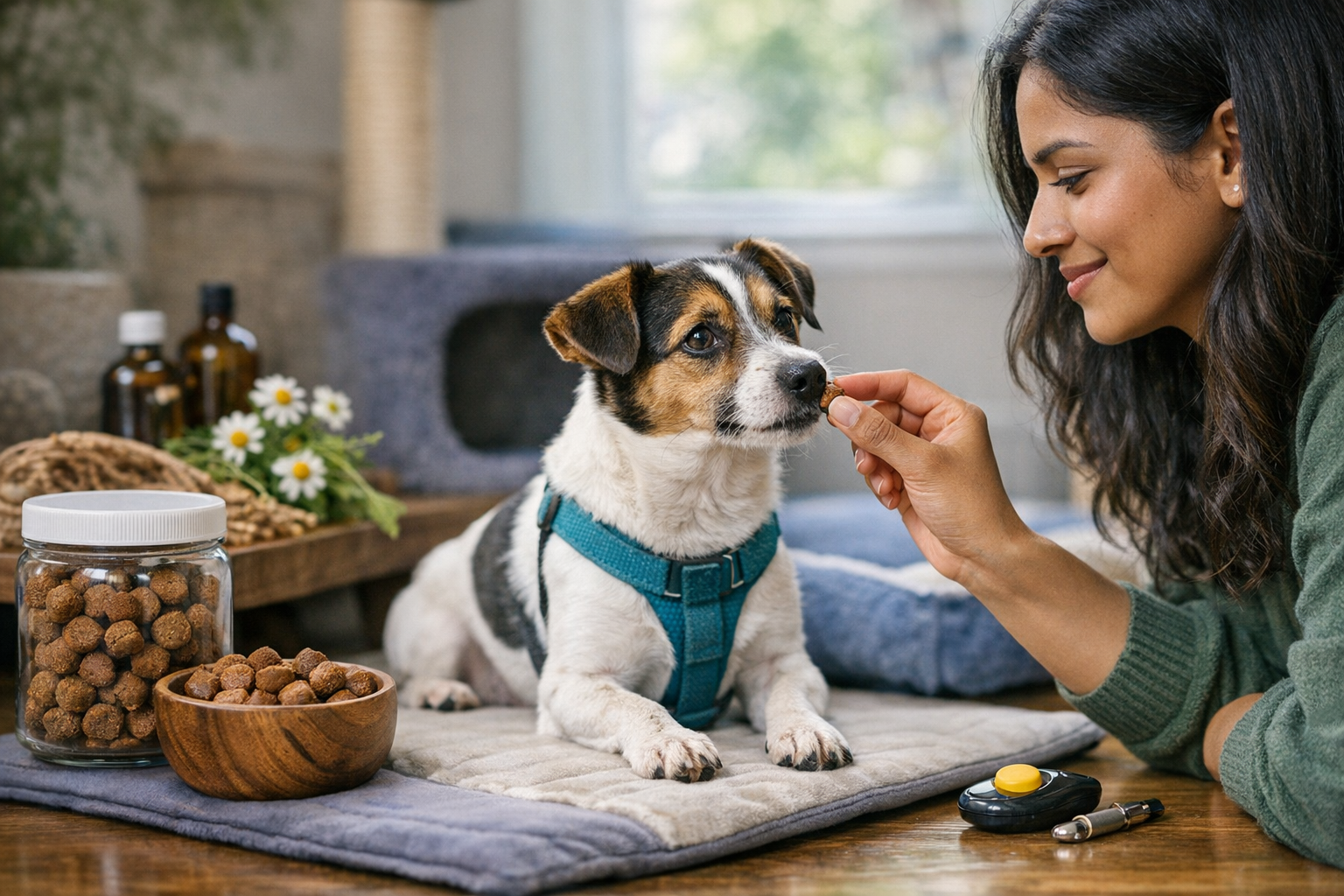
Solving Anxiety: Using Calming Treats in Conjunction with Behavior Training
Anxiety in pets is a common issue for many pet parents. Calming treats can help reduce stress and anxiety when used alongside behavior training strategies. This guide will explore how to effectively integrate these two approaches to create a happier, more relaxed pet.
Why This Topic Matters for Pet Parents
Understanding and addressing pet anxiety is crucial for both pet health and family harmony. Anxiety can lead to destructive behaviors, physical health problems, and strained relationships between pets and their owners. By combining calming treats with behavior training, you can:
- Enhance your pet’s well-being
- Improve overall behavior
- Reduce the need for medication
- Create a stronger bond with your pet
Key Insights
- Many pets experience anxiety due to changes in their environment, loud noises, or social interactions.
- Calming treats often contain natural ingredients like chamomile, valerian root, or L-theanine.
- Behavior training methods help modify your pet’s responses to anxiety triggers.
- A combined approach allows for more effective management of anxiety symptoms.
Expert Tips
Here are some veterinarian-style recommendations to help manage your pet’s anxiety effectively:
- Start Slow: Introduce calming treats gradually. Monitor your pet’s reaction to ensure they are well-tolerated.
- Use Consistent Commands: Use the same phrases during training to help your pet understand what is expected.
- Pair with Positive Reinforcement: Reward your pet with calming treats during training sessions when they show positive behavior.
- Establish a Safe Space: Create a quiet, comfortable area where your pet can retreat to when feeling anxious.
- Consult with a Vet: If anxiety persists, seek advice from a veterinarian or animal behaviorist.
Best Products or Treat Types
When choosing calming treats, consider these types for their effectiveness:
- Chews: Soft, chewy treats are easy to administer and can be given as a reward during training.
- Soft Baked Treats: These can be easier for pets to digest and are often palatable.
- Supplements: These can come in powdered form and can be sprinkled on food, offering flexibility in dosage.
- Natural Ingredients: Look for treats with calming herbs like poppy, ashwagandha, or passionflower.
Common Mistakes to Avoid
Avoid these mistakes to ensure effective anxiety management:
- Skipping Behavior Training: Only using treats without addressing behavior can lead to inconsistent results.
- Overusing Calming Treats: Too many can lead to digestive issues. Use them as a supplement, not a replacement.
- Failing to Monitor Effects: Keep track of your pet’s reactions and adjust the approach as necessary.
- Neglecting Triggers: Ignoring specific anxiety triggers can hinder overall progress.
FAQs
- How long does it take for calming treats to work?
Most pets may start to feel the effects within 30-60 minutes, but results can vary. - Can I give my pet too many calming treats?
Yes, overuse can lead to upset stomach. Always follow the recommended dosage on the package. - Are there specific breeds more prone to anxiety?
Some breeds, like Border Collies and Chihuahuas, are known to be more anxious than others. - Can calming treats replace professional training?
No, they should complement training, but not replace it. - Are calming treats safe for all pets?
Consult your vet if your pet has any health conditions or is on medication.
Conclusion
Combining calming treats with behavior training is an effective strategy for managing pet anxiety. By understanding your pet’s triggers and using the right tools, you can help them feel more comfortable and secure. Always consult with your vet to ensure the best approach for your furry friend. Together, you can build a happier, more harmonious household for both you and your pet.