

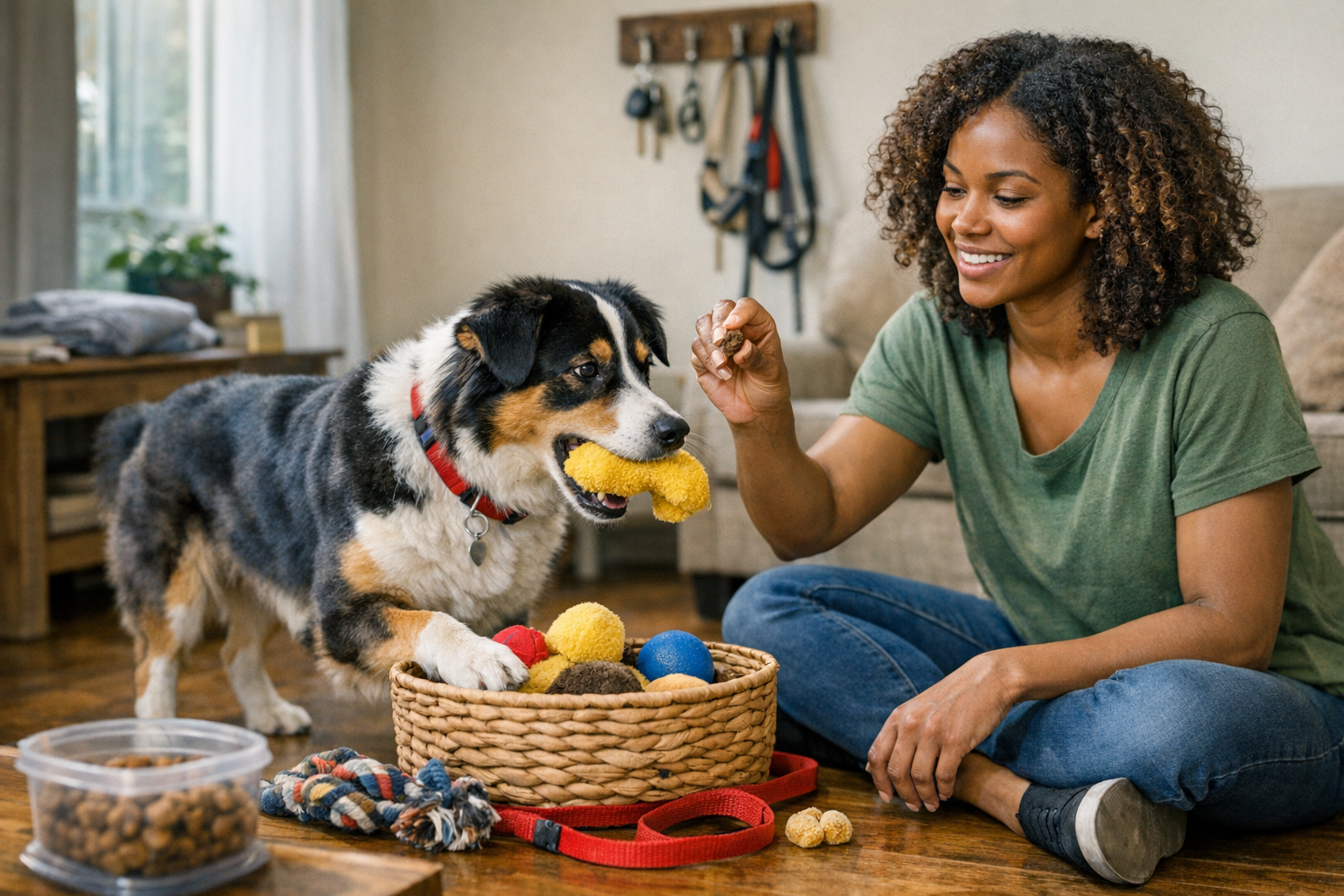
Teaching Multi-Step Commands (Tidy Up, Get Leash, etc.) with Sequential Rewards
Teaching your pet multi-step commands can make daily routines smoother and more enjoyable. Using sequential rewards, you can motivate your pet to follow these commands while strengthening your bond. Here’s how you can effectively train your furry friend using this method.
Why This Topic Matters for Pet Parents
Multi-step commands help pets learn complex tasks while enhancing their obedience. This training is beneficial for:
- Promoting good behavior
- Improving communication between you and your pet
- Making daily routines easier for both of you, like tidying up or getting their leash
Key Insights
Understanding the fundamentals of sequential rewards is essential to training your pet effectively. Here are some critical insights:
- Multi-step commands break down complex tasks into simpler actions.
- Sequential rewards help your pet understand the connection between actions and rewards.
- This training method boosts your pet’s confidence and eagerness to learn.
- Consistency is key; use the same commands and rewards during training sessions.
Expert Tips
Here are some veterinarian-style recommendations to ensure your training is successful:
- **Start simple**: Begin with basic commands like “Sit” or “Stay” before moving on to multi-step commands.
- **Use clear cues**: Ensure your commands are distinct and easy to understand.
- **Practice regularly**: Incorporate training into daily routines, such as during playtime or walks.
- **Be patient**: Pets learn at their own pace. Celebrate small victories to keep their spirits high.
- **Offer variety**: Use different types of rewards, such as treats, praise, or toys, to keep your pet engaged.
Best Products or Treat Types
Choosing the right treats can make training more effective. Here are some recommended treat types:
- **Soft, chewy treats**: These are easy to chew and quick to consume, perfect for maintaining focus during training.
- **Small-sized treats**: Choose treats that are small enough to not distract your pet from training.
- **Low-calorie options**: Keep treats healthy and appropriate for frequent rewarding.
- **Natural ingredients**: Look for treats that have no artificial additives for better health.
Common Mistakes to Avoid
Training your pet can be straightforward, but avoid these common pitfalls:
- **Inconsistent commands**: Using different words for the same command can confuse your pet.
- **Over-rewarding**: Giving too many treats can lead to unhealthy weight gain.
- **Skipping steps**: Don’t move to complex commands without ensuring your pet masters the basics first.
- **Ignoring the pet’s mood**: If your pet seems distracted or disinterested, it’s okay to take a break and try later.
FAQs
1. How long does it take to teach multi-step commands?
The time varies by pet, but consistent daily practice can yield results in a few weeks.
2. Can all pets learn multi-step commands?
Most pets can learn these commands, but some animals may take longer than others. Patience is key!
3. What if my pet isn’t motivated by treats?
Many pets respond to praise, playtime, or toys. Experiment to find what motivates your pet best.
4. Can I train multiple commands at once?
It’s best to focus on one command at a time to avoid confusing your pet. Once they master one, move on to the next.
5. How can I tell if my pet understands the command?
Look for signs of recognition, like them responding correctly to the command without hesitation.
6. Should I always reward my pet during training?
Provide rewards frequently while your pet is learning, but reduce them gradually as they master commands.
Conclusion
Teaching your pet multi-step commands using sequential rewards is an effective and enjoyable training method. By understanding the process, using the right products, and avoiding common mistakes, you can help your pet become a well-behaved companion. Embrace the journey, celebrate milestones, and strengthen the bond you share with your pet. Happy training!