

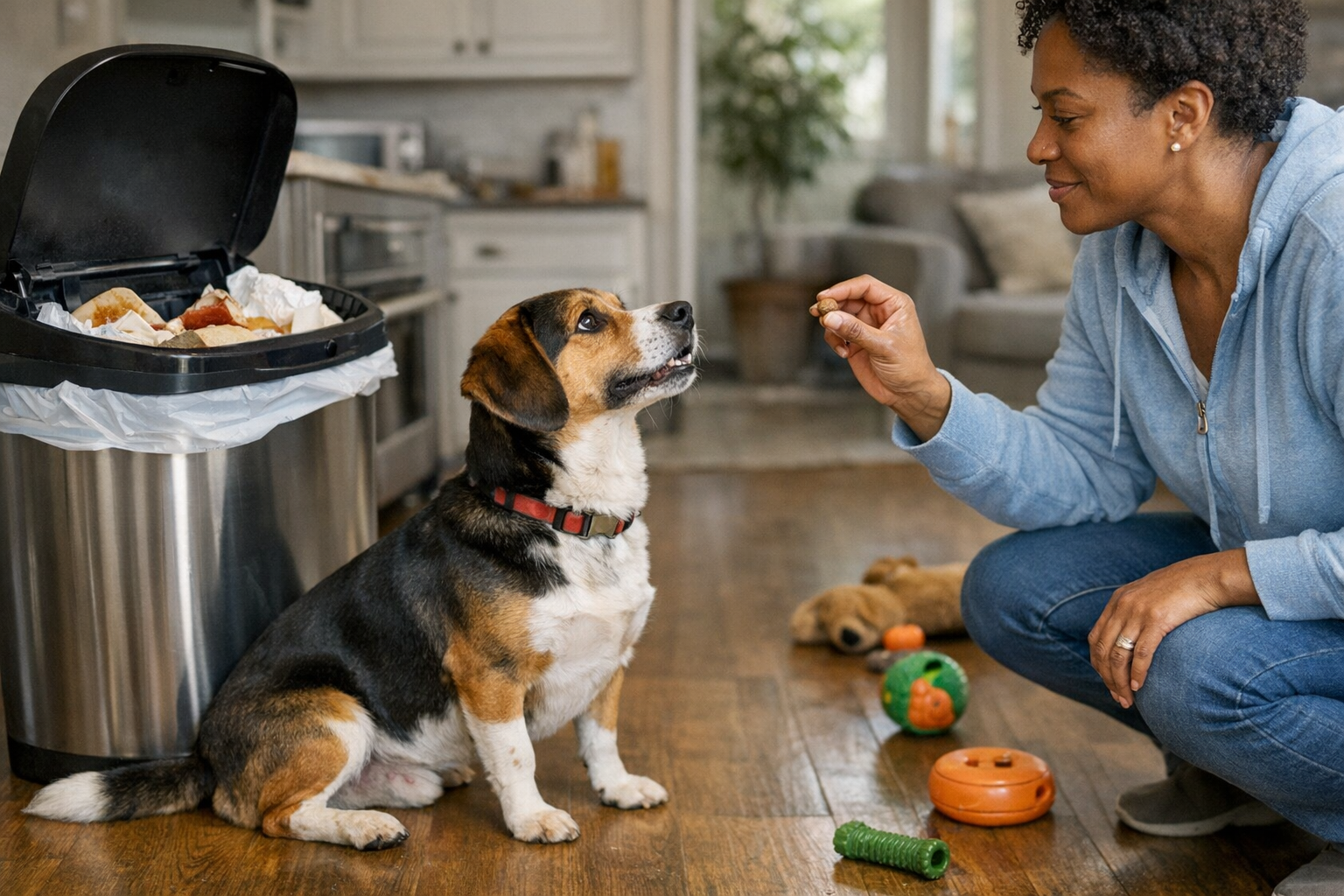
Using Treats to Stop Your Dog From Getting Into the Trash
Dealing with a dog that loves to rummage through the trash can be a challenge for pet parents. By using treats strategically, you can redirect your dog’s attention and prevent unwanted trash diving. In this article, we will explore effective ways to use treats to manage this behavior.
Why This Topic Matters for Pet Parents
Many pet owners face the frustrating issue of their dogs getting into the trash. This behavior not only creates a mess but can also lead to health concerns if your dog consumes harmful items. Understanding how to manage this behavior using treats can help ensure a cleaner home and a healthier pet.
Key Insights
- Dogs are naturally curious and often explore their environment through their noses and mouths.
- Trash cans can contain enticing smells that attract curious dogs.
- Using treats can help communicate to your dog what behaviors are acceptable.
- Consistency is key to effectively training your dog.
Expert Tips
Here are some recommendations from veterinarians to help curb your dog’s trash diving habits:
- Positive Reinforcement: Reward your dog with a treat when they ignore the trash can.
- Teach “Leave It”: Use treats to train your dog to leave the trash alone. Start with a treat in your hand and say “leave it.” When they back away, reward them.
- Manage the Environment: Store trash cans in a secure location or use dog-proof trash containers.
- Provide Alternatives: Offer engaging chew toys or puzzle toys stuffed with treats to keep your dog occupied.
- Regular Exercise: Ensure your dog gets enough physical activity and mental stimulation to reduce boredom.
Best Products or Treat Types
Consider these types of treats that can enhance your training efforts:
- Soft, chewy treats: These are great for quick rewards.
- Low-calorie training treats: Perfect for frequent rewards without adding extra calories.
- Puzzle-style treats: Treats that require some work to get to can engage your dog’s mind.
- Healthy chew sticks: These can keep your dog busy and distract them from the trash.
Common Mistakes to Avoid
Here are some common pitfalls to avoid when training your dog to stay out of the trash can:
- Ineffective Training: Not being consistent with commands or rewards can confuse your dog.
- Using Too Few Treats: If you don’t reward your dog often enough, they may not understand the desired behavior.
- Negative Reinforcement: Yelling at your dog can create fear and anxiety rather than teaching them proper behavior.
- Ignoring Other Behaviors: Focus only on trash diving, ignoring other undesirable behaviors can lead to mixed signals.
FAQs
1. Why does my dog dig through the trash?
Dogs are scavengers by nature and are often attracted to the smells of food in the trash. It’s their instinct to explore and find tasty treats.
2. How can I train my dog to leave the trash alone?
Use positive reinforcement with treats when your dog stays away from the trash. Teach them commands like “leave it” to discourage them from going near it.
3. What types of treats are best for training?
Soft, low-calorie treats work well for training because they can be given frequently without overfeeding your dog.
4. Can I use my dog’s regular food as treats?
Yes, you can use small pieces of your dog’s regular kibble as treats, as long as you adjust their meal portions accordingly to avoid overeating.
5. Should training be done in a specific environment?
Start training in a quiet, distraction-free area. Gradually increase distractions as your dog gets better at ignoring the trash.
6. How long does it take to train my dog to stop getting into the trash?
The time it takes to train your dog varies by individual and consistency in training. With dedication, most dogs can learn within a few weeks.
Conclusion
Using treats effectively can help discourage your dog from getting into the trash while also reinforcing positive behaviors. Remember to be patient, consistent, and most importantly, to make training a fun experience for both you and your dog. By actively engaging with your pet and providing them with appropriate alternatives, you can keep your home clean and your furry friend safe.