

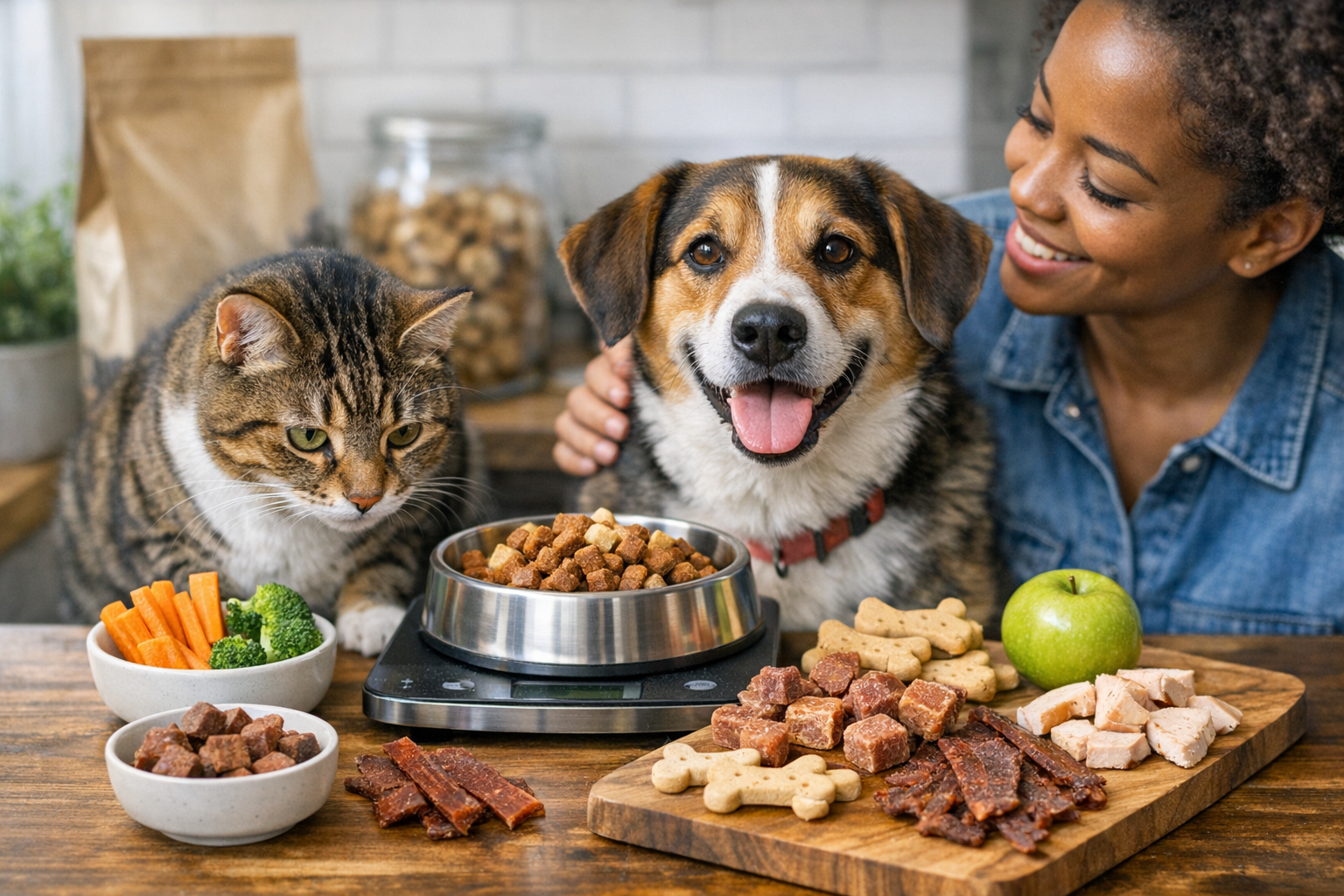
How to Calculate Your Pet’s Ideal Daily Caloric Intake (Including Treats)
Knowing how many calories your pet needs each day is crucial for their health. This guide will help you calculate your pet’s ideal daily caloric intake while ensuring you include treats in the mix. By understanding their dietary needs, you can keep your furry friend healthy and happy.
Why This Topic Matters for Pet Parents
Calculating your pet’s daily caloric intake is essential for many reasons:
- Prevents Obesity: Excess calories can lead to weight gain and obesity, which can cause health issues.
- Supports Healthy Growth: Puppies and kittens need the right amount of calories for growth and development.
- Maintains Energy Levels: The right caloric intake keeps your pet active and energetic.
- Improves Overall Health: A balanced diet helps maintain a healthy body and longer lifespan.
Key Insights
- Pet size, age, and activity level determine caloric needs.
- Different types of treats have varying calorie counts, which should be included in the total.
- Consulting with a veterinarian helps ensure accurate calculations.
- A weight management plan is vital for overweight pets.
Expert Tips
Veterinarians recommend the following when calculating your pet’s caloric intake:
- Use the Resting Energy Requirement (RER): To find your pet’s daily caloric need, first calculate RER: RER = 70 x (body weight in kg)
For example, a 10 kg dog: RER = 70 x 10 = 700 calories. - Adjust for Activity Level: Multiply RER by a factor of 1.2 to 2.0 based on activity. A sedentary pet might use the factor of 1.2. An active pet could be around 1.8.
- Account for Treats: Keep treats to no more than 10% of the total daily calories. This ensures your pet still gets nutrients from their main food.
- Regularly Monitor Weight: Adjust caloric intake if you notice weight gain or loss.
Best Products or Treat Types
When selecting treats for your pet, consider the following options:
- Low-Calorie Treats: Treats specifically labeled as low-calorie help in managing weight.
- Vegetable Snacks: Many pets enjoy crunchy veggies like carrots or green beans.
- Freeze-Dried Treats: These typically have fewer calories and are high in protein.
- Homemade Treats: Making your own treats allows you to control ingredients and calories.
Common Mistakes to Avoid
When calculating your pet’s caloric needs, many pet parents make mistakes:
- Ignoring Treats: Not accounting for the calories in treats can lead to overfeeding.
- Using Dog Food for Cats or Vice Versa: Each species has different caloric requirements and nutritional needs.
- Not Adjusting for Age: Puppies and kittens need more calories than adults; conversely, seniors may need less.
- Assuming All Dogs/Cats Need the Same: Each pet is unique and has varying needs based on individual factors.
FAQs
1. How do I find my pet’s weight in kilograms?
To convert pounds to kilograms, divide the weight in pounds by 2.2. For example, a 22-pound dog weighs about 10 kg (22 ÷ 2.2).
2. Can I feed my pet human food as treats?
Yes, but ensure the food is safe for pets. Foods like carrots, apples (without seeds), and plain cooked chicken can be great treats.
3. How often should I weigh my pet?
Weigh your pet monthly and adjust their diet if you notice weight changes.
4. What should I do if my pet is overweight?
Consult your veterinarian for a weight management plan, which may include dietary changes and increased exercise.
5. Can I use a calorie calculator for pets?
Yes, many online calculators can help estimate your pet’s calorie needs based on their weight and activity level.
6. Are there treats that can help with dental health?
Yes, some treats are designed to promote dental health and can be included in your pet’s calorie count.
Conclusion
Calculating your pet’s daily caloric intake is essential for maintaining their health and well-being. By understanding their unique needs and following expert tips, you can make informed decisions about their diet, including treats. Regular monitoring and adjustments will help keep your pet at a healthy weight. Remember, a happy pet is a healthy pet!