

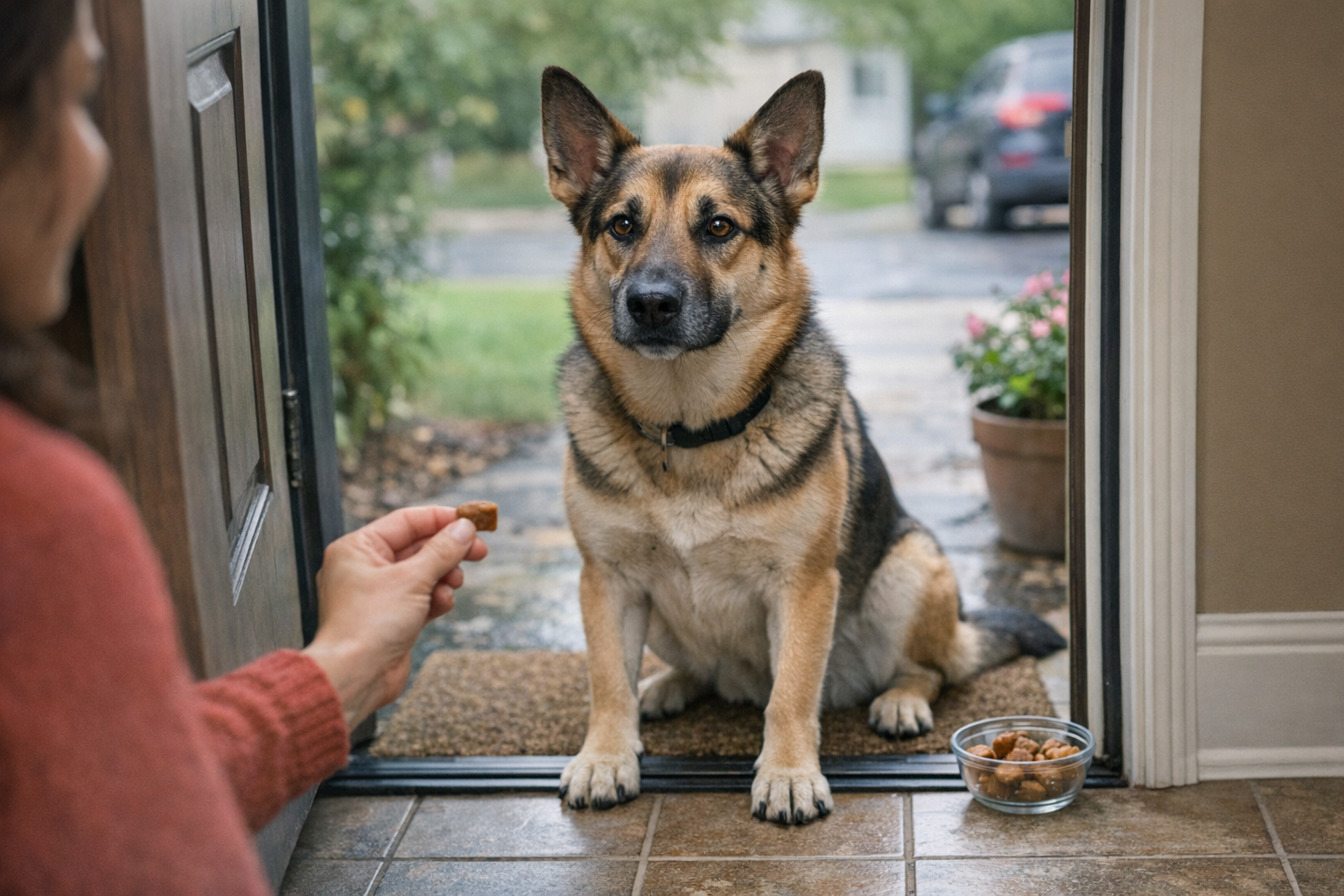
Solving Door Dashing: Using Treats to Teach a Reliable Stay at the Threshold
Door dashing can be a serious problem for pet owners. Many dogs and some cats rush to the door when it opens, putting themselves and others at risk. In this article, we’ll explore how to use treats to teach your pet to stay put at the threshold, ensuring everyone stays safe and calm.
Why This Topic Matters for Pet Parents
Door dashing not only puts your pet in danger but can also lead to accidents or injuries. Understanding how to address this behavior is essential for all pet parents. Here are a few reasons why this topic is important:
- Enhances safety for your pet and visitors.
- Reduces stress for both pets and owners.
- Helps create a calm home environment.
Key Insights
- Dogs and cats often dash to the door due to excitement or anxiety.
- A reliable “stay” command can prevent accidents when the door opens.
- Positive reinforcement, like treats, helps pets learn good behaviors faster.
Expert Tips
Veterinarians and animal behaviorists recommend several strategies to teach your pet to stay at the threshold:
- Start Slow: Practice the “stay” command in different parts of your home before moving to the door.
- Use High-Value Treats: Use tasty treats that your pet loves to encourage them to respond.
- Practice Door Exercises: Open the door slightly without going outside while rewarding your pet for staying put.
- Consistency is Key: Use the same commands and cues every time to help your pet learn.
- Limit Distractions: Start training in a quiet environment before adding more stimuli.
Best Products or Treat Types
Choosing the right treats can make a big difference in training your pet. Here are some recommendations for effective treat types:
- Soft Training Treats: These are typically easy to chew and digest, making them great for quick rewards.
- Freeze-Dried Meat Treats: High in protein and appealing to pets, these are perfect for motivation.
- Small Biscuits: Mini-sized biscuits can be great for repetition and reinforcement.
- Homemade Treats: Consider making treats at home with safe ingredients your pet loves.
Common Mistakes to Avoid
Training your pet can be challenging. Here are some common mistakes to steer clear of:
- Using Punishment: Negative reinforcement can cause fear rather than learning.
- Inconsistent Commands: Confusing your pet with different commands can slow progress.
- Rushing the Process: Training takes time; patience is essential.
- Ignoring Progress: Be sure to celebrate small victories with your pet to keep them motivated.
FAQs
1. How long will it take to train my pet to stop door dashing?
The time it takes can vary based on your pet’s age, breed, and temperament. Consistent practice can lead to results in a few weeks.
2. Can I train my cat to stay at the door too?
Yes, cats can also be trained using similar techniques. Use treats they enjoy and be patient.
3. What should I do if my pet doesn’t respond to the “stay” command?
If your pet struggles with the “stay” command, go back to the basics. Practice it in quieter settings and gradually increase distractions.
4. Is it safe to give my pet treats while training?
Yes, treats can be a safe and effective training tool if they are appropriate for your pet’s diet and health needs.
5. Can changing my pet’s environment help with training?
Yes, practicing in different environments can help your pet generalize the behavior, but ensure you start in a quiet space.
6. What if my pet still dashes out even after training?
If the behavior persists, consult with a professional trainer or veterinarian for personalized strategies.
Conclusion
Teaching your pet to stay at the threshold can prevent dangerous situations and make your home a more peaceful place. Using treats as a part of positive reinforcement will enhance the learning process. Remember to be patient, consistent, and to enjoy the bonding experience with your pet. With these steps, your door dashing days will soon be behind you!