
The Hidden Sugars in Pet Treats: What to Look for and Why it Matters
Many pet treats on the market contain hidden sugars that can harm your furry friends. Understanding these hidden sugars is essential for making healthier choices for your pets. This guide will help you navigate the ingredient lists and choose better treats for your beloved companions.
Why This Topic Matters for Pet Parents
As a pet parent, you want the best for your furry family members. However, many pet treats can contain unsettling ingredients, especially hidden sugars. These sugars can lead to various health problems, such as obesity and diabetes, which can severely affect your pet’s quality of life. Understanding what to look for can help you make informed decisions and keep your pets healthy.
Key Insights
To better understand hidden sugars in pet treats, consider the following:
- Some pet treats list sugars under different names, making them harder to identify.
- Excess sugars can lead to weight gain and health issues in pets.
- Natural sources of sugar, like fruits, can be healthier but still should be monitored.
- Always check the ingredient list and avoid treats with added sugars or syrups.
Expert Tips
Here are some veterinarian-style recommendations to help you choose the right treats:
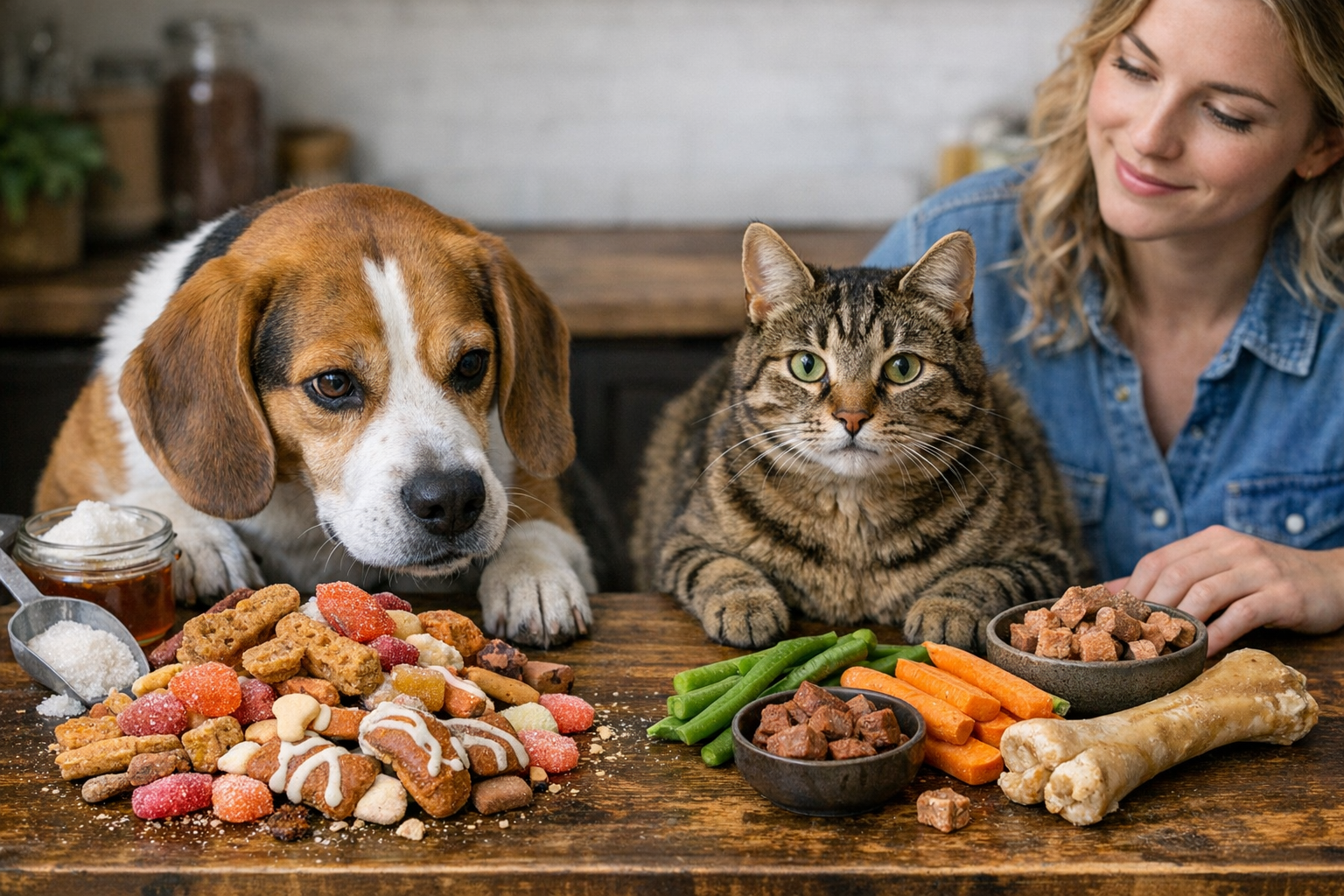
- Read ingredient lists carefully. Look for words like “sugar,” “glucose,” “fructose,” or “corn syrup.”
- Opt for treats with whole food ingredients, such as meats, vegetables, and healthy grains.
- Limit treats that are high in calories and low in nutritional value.
- Consider your pet’s specific dietary needs. A vet can help you determine what is best for them.
- Include fresh fruits and veggies in moderation as treats. Options like carrots and green beans are great.
Best Products or Treat Types
Choosing the right types of treats can make a big difference in your pet’s health. Here are some great options:
- Dehydrated or Freeze-Dried Treats: These maintain nutrients and are lower in sugar.
- Organic Treats: Often made with better quality ingredients and fewer additives.
- Homemade Treats: Make your own to control the ingredients and avoid hidden sugars.
- Natural Chews: Options like raw bones or natural dental chews are low in sugar and good for dental health.
Common Mistakes to Avoid
Here are some common pitfalls pet parents should avoid:
- Ignoring the Ingredient List: Always check for hidden sugars.
- Assuming All Treats Are Healthy: Not all treats with a healthy label are sugar-free.
- Overfeeding Treats: Balance treats with a healthy diet to avoid overweight pets.
- Choosing Flavor Over Nutrition: Just because a treat is tasty doesn’t mean it’s good for your pet.
FAQs
- What are the signs of too much sugar in my pet’s diet?
Weight gain, lethargy, and increased thirst can be signs of too much sugar. - Can I give my pet fruit as a treat?
Yes, but in moderation. Some fruits are healthier than others. Consult your vet. - Are there specific breeds that need to avoid sugar?
Yes, some breeds are more prone to obesity and diabetes, so be cautious. - How can I tell if a treat is good for my pet?
Look for natural ingredients, no hidden sugars, and check with your vet. - Is it better to make my own treats?
Homemade treats allow you to control ingredients, preventing hidden sugars.
Conclusion
Understanding hidden sugars in pet treats is essential for your pet’s overall health. By choosing wisely, you can help your pet lead a happier, healthier life. Always check the ingredients, consider healthier treat options, and consult your vet for personalized advice. Your furry friend will thank you!