

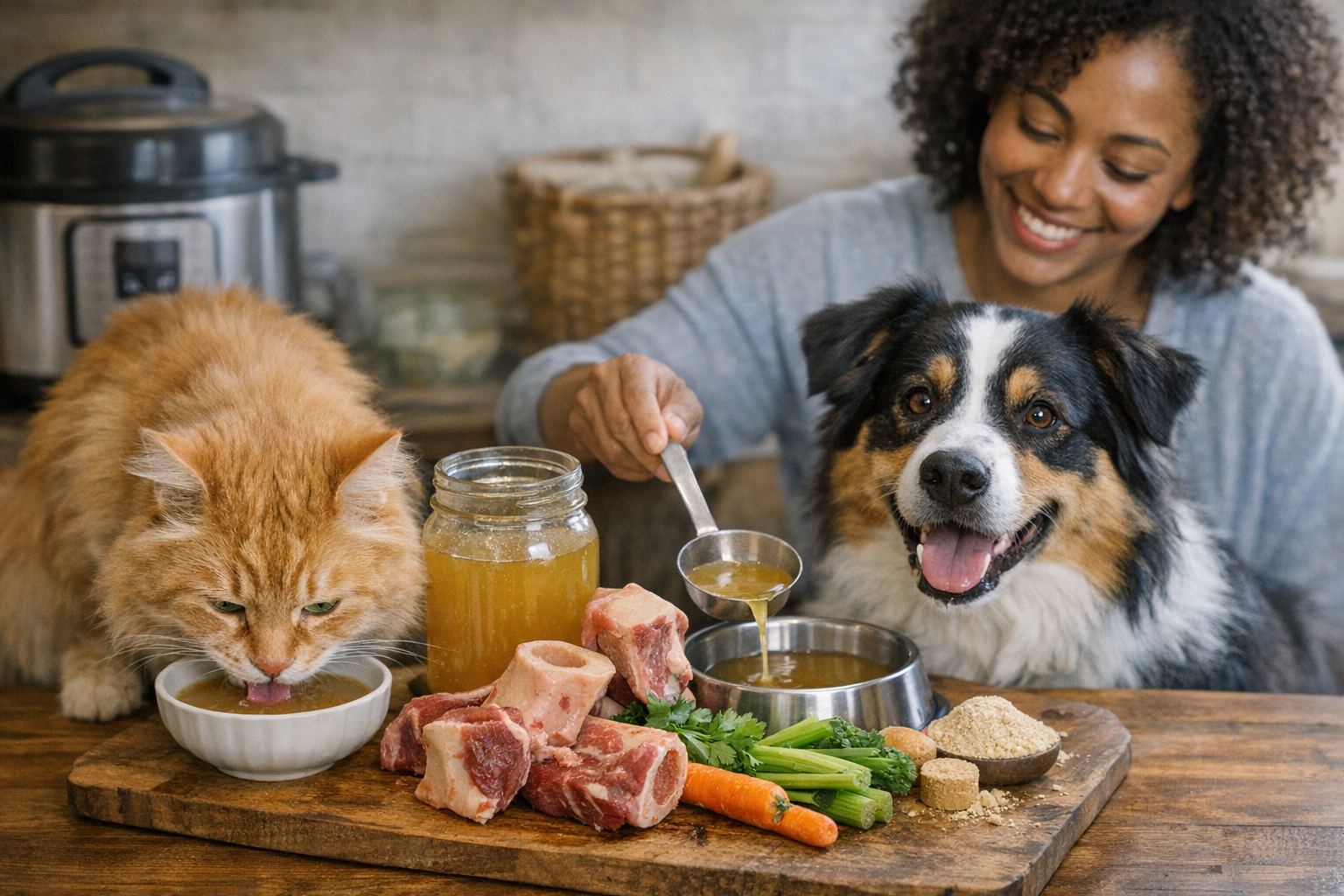
The Benefits of Bone Broth: Is it a Health Drink or Just a Treat?
Bone broth is becoming a popular choice for pet parents, but what are its real benefits? This article explores how bone broth can be part of your pet’s diet and the unique advantages it brings. From nutritional benefits to key tips on how to serve it, let’s dive in!
Why This Topic Matters for Pet Parents
As pet parents, we want the best for our furry friends. Understanding what goes into their diets helps us make informed choices. Bone broth is gaining attention for its health benefits, but it’s important to know if it’s more than just a tasty treat. This topic matters because a well-informed decision can improve your pet’s health, digestion, and overall well-being.
Key Insights
- Nutritious Base: Bone broth is rich in vitamins, minerals, and amino acids.
- Supports Joint Health: It contains glucosamine and chondroitin which benefit joints and mobility.
- Hydration Boost: It provides hydration for pets, especially those that may not drink enough water.
- Gut Health: Bone broth can help in healing the gut lining, promoting better digestion.
- Tasty Treat: Most pets love the flavor, making it an excellent way to encourage food intake.
Expert Tips
Here are some veterinarian-style recommendations to make the most out of bone broth for your pets:
- Choose Quality Ingredients: Use bones from human-grade meats. Bones should be organic and free of additives.
- Slow Cook: Always use a slow cooker or pressure cooker to extract nutrients without boiling.
- Remove Fat: After cooking, skim off excess fat to avoid too many calories.
- Start Slowly: Introduce bone broth gradually to avoid digestive upset. Start with a small amount and watch for any reactions.
- Consult Your Vet: Always check with your veterinarian before adding anything new to your pet’s diet, especially if they have existing health issues.
Best Products or Treat Types
Here are some types of bone broth you can consider for your pets:
- Homemade Bone Broth: Made from beef, chicken, or turkey bones, cooked with vegetables (like carrots and celery) and water.
- Dehydrated Bone Broth: This is a convenient option that can be mixed with water when needed.
- Store-Bought Options: Look for brands that emphasize no artificial additives or preservatives.
Common Mistakes to Avoid
When adding bone broth to your pet’s diet, be wary of these common mistakes:
- Using Cooked Bones: Never give cooked bones to pets, as they can splinter and cause injuries.
- Skipping Cooling: Allow bone broth to cool before serving it to prevent burns.
- Not Skimming Fat: High-fat broths can lead to pancreatitis in some pets, so be sure to remove excess fat.
- Ignoring Allergies: Be cautious if your pet has allergies to certain proteins; always monitor for adverse reactions.
FAQs
1. Can I give my dog bone broth every day?
Yes, but give it in moderation. A small amount daily can be beneficial, but too much can lead to digestive upset.
2. Is bone broth safe for cats?
Yes, cats can also enjoy bone broth. Just ensure it’s free of onions and garlic, which are toxic to them.
3. How do I store leftover bone broth?
Store it in an airtight container in the fridge for up to a week, or freeze it in ice cube trays for longer storage.
4. Can bone broth replace my pet’s regular meals?
No, bone broth is meant to be a supplement or treat, not a replacement for balanced meals.
5. How do I introduce bone broth to my pet?
Start with just a teaspoon mixed with their regular food and increase the amount gradually while observing how they react.
Conclusion
Bone broth can be a nutritious addition to your pet’s diet and not just a delicious treat. With its numerous health benefits, it can support joint health, improve digestion, and keep your furry friend hydrated. When you prepare or choose bone broth for your pets, always focus on quality and moderation. Remember, consulting your veterinarian is key to ensuring a safe and healthy diet for your pet. Enjoy nurturing your pet with this wholesome treat!