

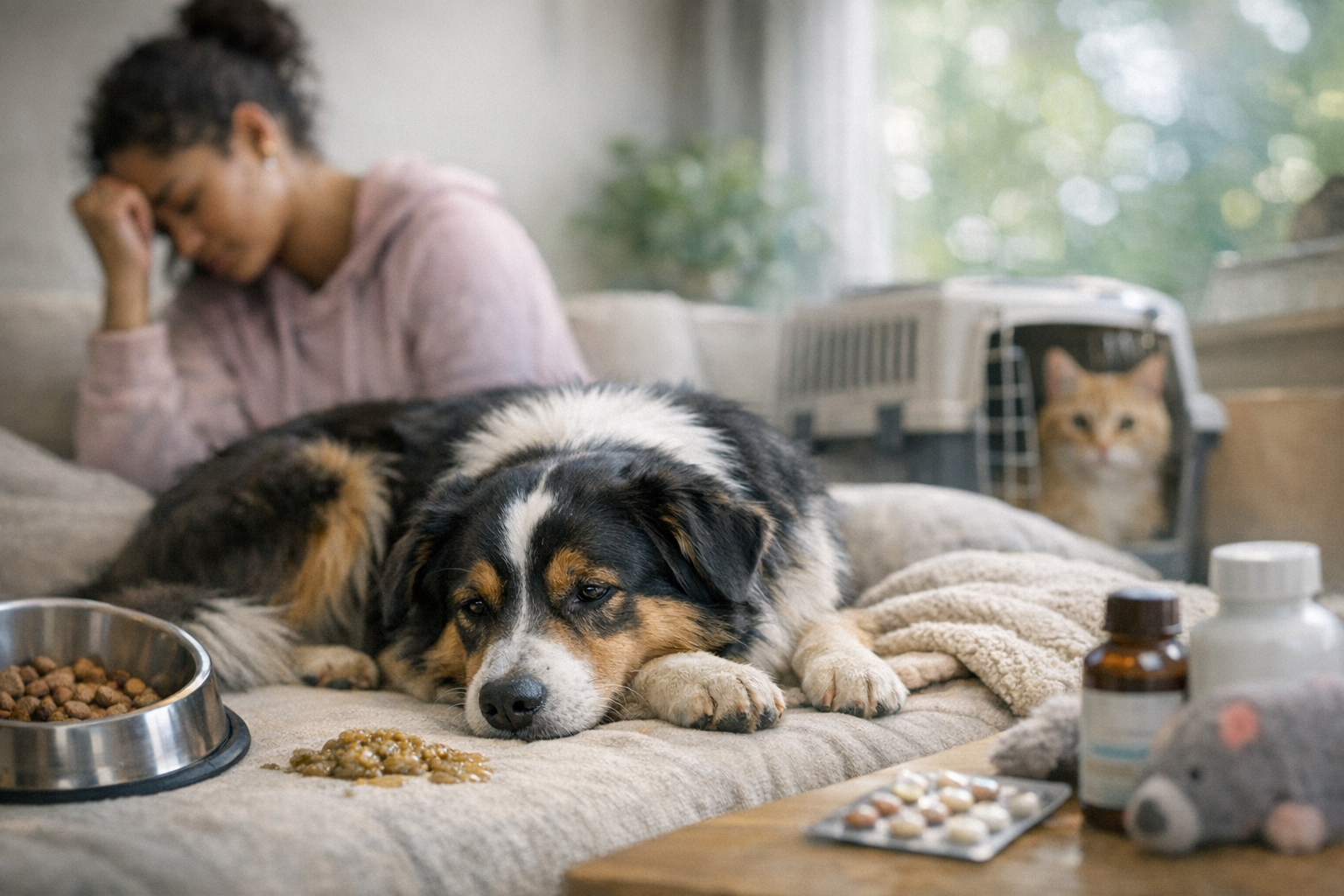
The Impact of Stress and Anxiety on Your Pet’s Digestive System
Stress and anxiety can greatly affect your pet’s health, especially their digestive system. Just like humans, pets can experience tummy troubles when they are stressed or anxious. Understanding this connection can help you better care for your furry friends.
Why This Topic Matters for Pet Parents
Pet parents need to recognize that emotional health is linked to physical health. Stress and anxiety can lead to various digestive issues in pets. By understanding these effects, you can help keep your pet happy and healthy.
Key Insights
- Stress triggers the ‘fight or flight’ response in pets, which can cause digestive issues.
- Common digestive problems include diarrhea, constipation, and vomiting.
- Pets can be stressed by various factors, such as loud noises, changes in routine, and new environments.
- Chronic stress may lead to long-term health issues if not addressed.
- Recognizing signs of stress in pets can help you intervene earlier.
Expert Tips
Veterinarians recommend several steps to help manage stress and anxiety for your pet:
- Maintain a routine: Keep feeding, walking, and playtimes consistent.
- Create a safe space: Designate a quiet area for your pet to retreat when feeling anxious.
- Use calming aids: Consider products like pheromone diffusers or natural calming treats.
- Engage in regular exercise: Regular physical activity can help release pent-up energy and reduce stress.
- Stay calm yourself: Pets often sense their owner’s stress. Remain calm during stressful situations to help reassure them.
Best Products or Treat Types
There are various products and treats that may help ease your pet’s anxiety:
- Calming chews made from natural ingredients like chamomile or valerian root.
- Pheromone sprays or diffusers to create a relaxing environment.
- Interactive toys that keep your pet mentally stimulated.
- Soft, comforting bedding or blankets to offer a safe space.
- Natural supplements like CBD, which may help reduce anxiety in some pets.
Common Mistakes to Avoid
- Ignoring signs of stress: Watch for behaviors like excessive barking, hiding, or changes in appetite.
- Changing routines abruptly: Sudden changes can increase anxiety in pets.
- Forcing interactions: Some pets may need time alone to decompress. Respect their space.
- Using punishment as discipline: This can increase fear and anxiety, worsens digestive issues.
- Neglecting their diet: A poor diet can worsen digestive problems, especially during stressful times.
FAQs
1. What are the signs that my pet is stressed?
Common signs include excessive barking, hiding, changes in eating or drinking habits, and destructive behavior.
2. Can a change in diet help reduce my pet’s stress?
Yes, a balanced diet with essential nutrients can improve overall health and may help reduce stress-related digestive issues.
3. How can I tell if my pet’s digestive issues are due to stress?
If your pet has frequent digestive issues during known stressful situations or changes in their routine, it may be stress-related.
4. Are there specific breeds more prone to stress and digestive problems?
Yes, some breeds are more sensitive to stress. Breeds like border collies and terriers may react more to stressful situations.
5. Should I consult a veterinarian if my pet shows signs of stress-related digestive issues?
Absolutely! A veterinarian can help identify the underlying causes and recommend appropriate treatments.
6. Can I use natural remedies for my pet’s anxiety and digestive issues?
Yes, many natural remedies can be effective, but consult your veterinarian before starting any new treatments.
Conclusion
Understanding the impact of stress and anxiety on your pet’s digestive system is vital for their overall health. By recognizing the signs, using calming products, and taking proactive steps to reduce stress, you can help your furry friend lead a happier, healthier life. Remember, a happy pet is a healthy pet!