



Understanding Cat Nutrition Labels: Deciphering the First 5 Ingredients
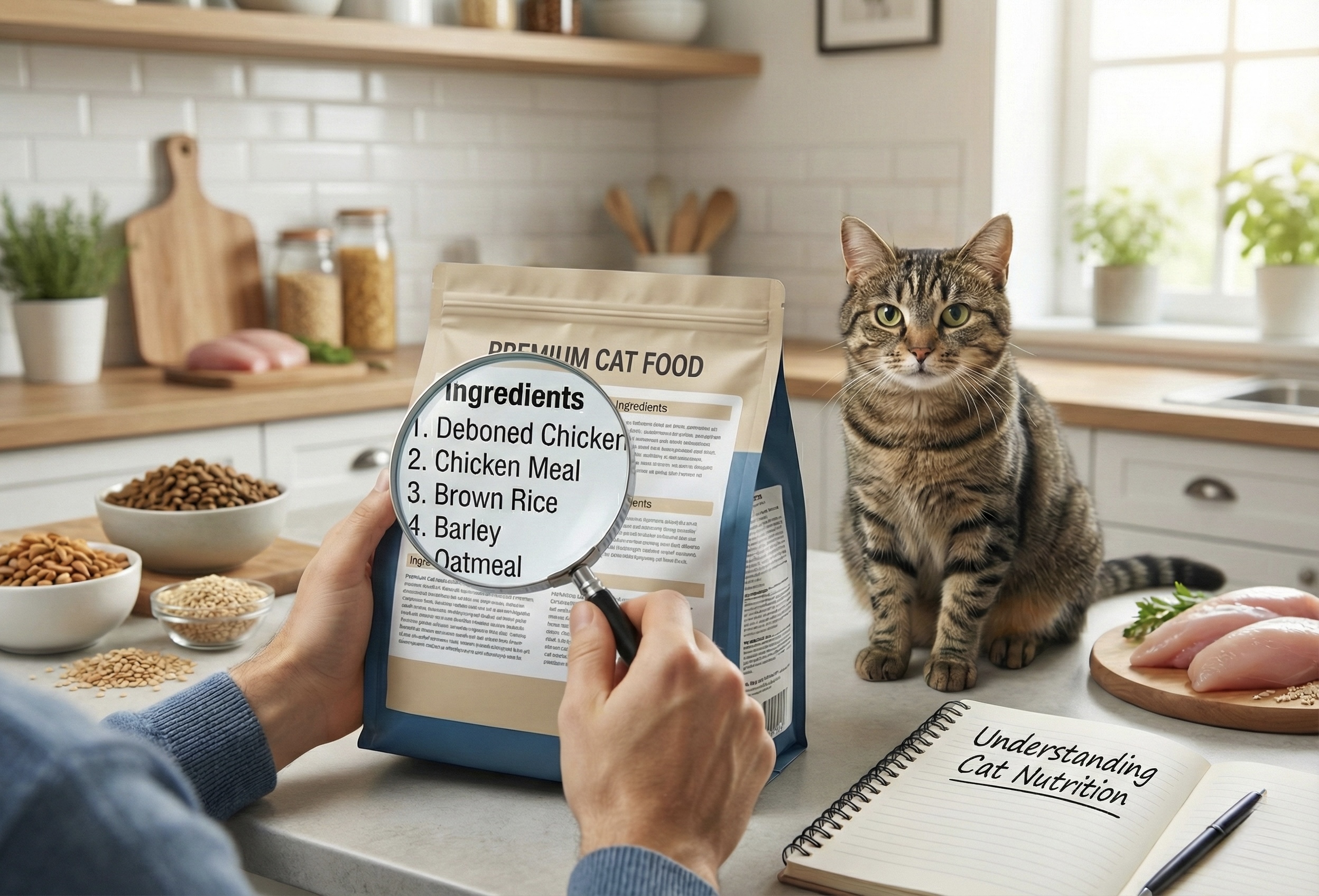
Cat nutrition labels can be confusing, but understanding them is important for your feline friend’s health. In this article, we’ll break down the first five ingredients found on cat food labels. This way, you can make better choices for your pet and ensure they get the nutrition they need.
Why This Topic Matters for Pet Parents
Knowing what’s in your cat’s food can help you keep them healthy and happy. The right nutrition can prevent health problems and improve your cat’s overall quality of life. Here are a few reasons understanding cat nutrition labels matters:
- Helps maintain a healthy weight.
- Reduces the risk of chronic diseases.
- Supports energy levels and general well-being.
Key Insights
The first five ingredients on a cat food label are crucial because they make up the bulk of the food. Here’s what to look for:
- High-quality protein: Look for named meat sources, like chicken or salmon.
- Avoid fillers: Ingredients like corn and wheat are often just fillers and don’t provide necessary nutrients.
- Know your carbs: Cats are obligate carnivores, so they don’t need many carbohydrates.
- Fats and oils: Healthy fats (like chicken fat or fish oil) are essential for coat health.
- Vitamins and minerals: Look for added vitamins and minerals to support your cat’s health.
Expert Tips
Here are some veterinarian-style recommendations to help you when choosing cat food:
- Research brands: Look for brands with a good reputation for quality ingredients.
- Check for AAFCO statement: Ensure the food meets the standards set by the Association of American Feed Control Officials.
- Consult your vet: Discuss any specific dietary needs or restrictions your cat may have.
- Watch for allergies: Keep an eye on your cat for any signs of food allergies, like itching or digestive issues.
- Consider life stage: Choose food appropriate for your cat’s age (kitten, adult, or senior).
Best Products or Treat Types
While there are many different brands on the market, here are some types of cat food and treats to consider:
- High-protein kibble: Look for options that list meat as the first ingredient.
- Canned wet food: Usually, higher in protein and moisture, beneficial for hydration.
- Raw or freeze-dried food: Mimics a natural diet and can be nutritious if balanced properly.
- Healthy cat treats: Look for treats that are high in protein and low in fillers.
Common Mistakes to Avoid
When it comes to cat nutrition, here are a few common mistakes to watch out for:
- Ignoring ingredient lists: Always read the label, especially the first five ingredients.
- Choosing by price alone: Higher price doesn’t always mean better quality. Research is key.
- Not considering your cat’s lifestyle: Active cats may need more calories than less active pets.
- Neglecting hydration needs: Ensure your cat has access to fresh water, especially when feeding dry food.
- Switching too quickly: Gradually change foods to avoid digestive upset.
FAQs
1. What should I look for in the first ingredient?
The first ingredient should ideally be a named source of protein, such as chicken, beef, or fish.
2. Why are some ingredients considered fillers?
Fillers, like corn or wheat, provide little nutritional value and are often used to bulk up the food.
3. Can I feed my cat a vegetarian diet?
Cats are obligate carnivores and require certain nutrients found in animal products, so a strictly vegetarian diet is not recommended.
4. How can I tell if my cat is allergic to their food?
Watch for signs like itching, hair loss, or digestive issues. Consult your vet if you suspect a food allergy.
5. Should I buy grain-free cat food?
Some cats may benefit from grain-free diets, but it’s essential to ensure they still get adequate protein and nutrients. Consult your vet for guidance.
6. Are homemade diets a good option for my cat?
While homemade diets can be tailored to your cat’s needs, they must be properly balanced. Consult a vet before switching to a homemade diet.

Conclusion
Understanding cat nutrition labels is essential for providing your feline companion with the best possible diet. By focusing on the first five ingredients, you can make informed decisions that promote their health. Remember to consult with your veterinarian for personalized advice and ensure you’re making the best choices for your cat’s diet. With the right nutrition, you can help your furry friend lead a long, healthy life.