

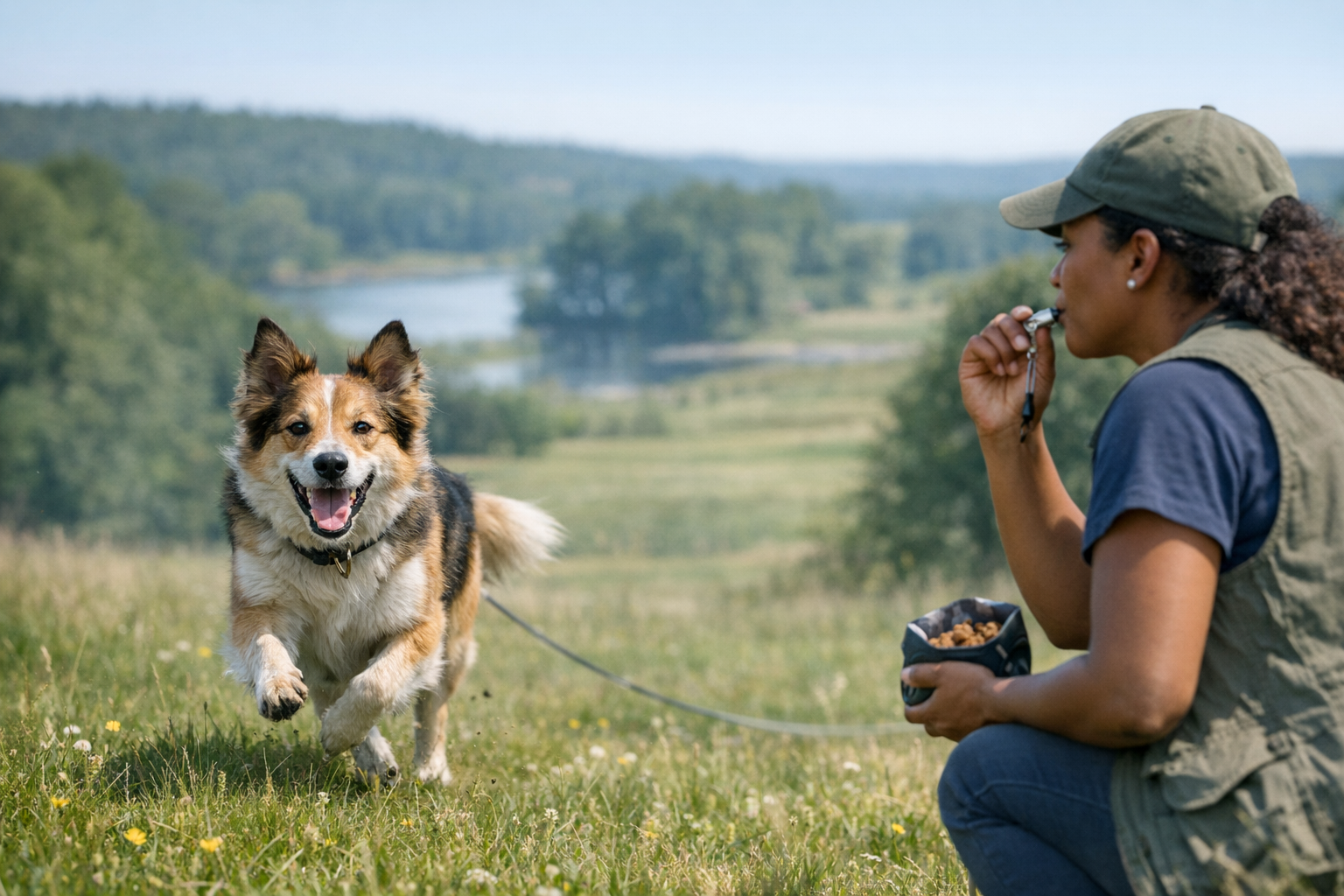
Advanced Recall: The Whistle and Treat Combo for Long Distances
Training your dog to come when called is important, especially in open spaces. Using a whistle combined with treats can improve your dog’s recall skills, even from long distances. This approach not only strengthens your bond but also enhances their safety during outdoor adventures.
Why This Topic Matters for Pet Parents
Many pet owners struggle with getting their dogs to come back reliably, especially in distracting environments. Teaching your dog to respond to a whistle and rewarding them with treats can make a real difference. Here’s why this topic is crucial:
- Improves safety for your dog in open spaces.
- Strengthens the bond between you and your pet.
- Reduces stress during outdoor activities.
Key Insights
- Dogs respond better to whistle signals than voice commands at distances.
- Treats serve as positive reinforcement, encouraging good behavior.
- Consistency in training helps dogs understand expectations.
- Start training in a quiet area before moving to busier spaces.
Expert Tips
Here are some veterinarian-style recommendations for using a whistle and treats effectively:
- Choose the Right Whistle: Use a whistle that emits a high-frequency sound. This can be heard by dogs better than normal voices.
- Consistent Training Signals: Use the whistle consistently at the same pitch and duration each time you call your dog.
- Start Slowly: Begin in a controlled environment. Gradually increase distance as your dog gets better at responding.
- Reward Immediately: Reinforce good behavior with a treat as soon as your dog comes to you.
- Practice Regularly: Short but frequent training sessions will help solidify the behavior in your dog’s mind.
Best Products or Treat Types
Choosing the right treats can make your training sessions more effective. Here are some great options:
- Soft Training Treats: Look for small, soft treats that can be consumed quickly. These are usually more appealing to dogs.
- High-Value Treats: Use meats like chicken, turkey, or beef that are especially enticing during training.
- Homemade Treats: Making your own treats can allow you to control ingredients and ensure freshness.
- Small Kibble: Use your dog’s regular food during training to make sessions less demanding on your pocketbook.
Common Mistakes to Avoid
To maximize the effectiveness of your training, steer clear of these common errors:
- Inconsistency: Failing to use the whistle or treats reliably can confuse your dog.
- Only Calling for Bad Situations: If you only call your dog to scold them, they may avoid you.
- Too Many Distractions: Starting in a busy area can overwhelm your dog. Begin in a quiet place.
- Skipping the Reward: Not rewarding your dog for coming can diminish their motivation.
FAQs
1. How do I introduce my dog to the whistle?
Start by letting your dog hear the whistle without any commands. Reward them immediately with a treat when they respond. Repeat this process to make the connection.
2. Can any dog learn to come when called?
Yes! With patience and consistent training, dogs of all ages can learn to respond to a whistle or command when called.
3. How long should each training session last?
Training sessions should be around 5 to 10 minutes. This helps keep your dog engaged without losing their interest.
4. What if my dog doesn’t come when called?
If your dog doesn’t respond, reduce distractions, and try again. Ensure you’re using high-value treats to reward them effectively.
5. How often should I practice recall with my dog?
Practicing 3 to 4 times a week, in short bursts, can be very effective. Regular practice helps reinforce the behavior.
6. Can I use a regular dog leash for recall training?
Yes, a regular leash can help control your dog during recall training. However, using a long line (a longer leash) allows your dog more freedom while still maintaining control.
Conclusion
Training your dog to come when called with a whistle and treats is a powerful method that enhances safety and strengthens your bond. By using consistent signals, rewarding appropriately, and avoiding common mistakes, you can achieve successful recall even at long distances. With patience and practice, your furry friend will be eager to return to you every time. Happy training!