

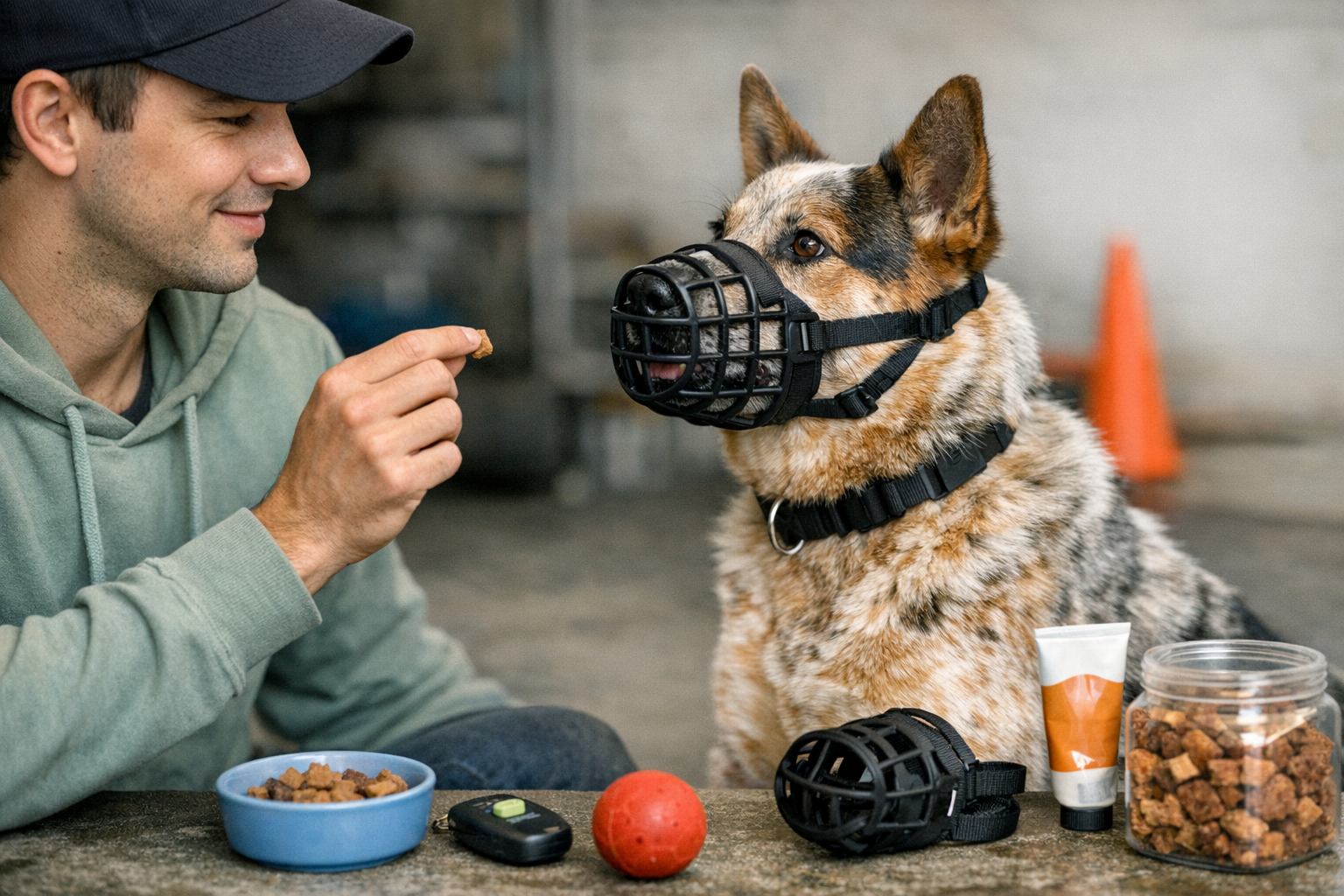
Introducing the Muzzle: A Positive, Treat-Based Training Guide
Using a muzzle for your dog is often misunderstood. This guide helps pet parents learn how to introduce muzzles positively through treat-based training. You’ll discover important tips, common mistakes to avoid, and some great products that can help you along the way.
Why This Topic Matters for Pet Parents
Understanding muzzles is essential for all pet owners. Here’s why:
- Safety: Muzzles can protect other pets and people when needed.
- Comfort: Learning to wear a muzzle can make visits to the vet or groomer easier.
- Socialization: Muzzles can help dogs with behavioral issues interact more safely with other dogs.
Key Insights
Here’s what you should know about muzzle training:
- Muzzles are not a punishment; they are a helpful tool.
- Positive reinforcement works best—this means rewarding good behavior with treats.
- Choose the right muzzle type—basket muzzles are better for long wear.
- Introduce muzzles slowly to avoid stress or fear.
- Be consistent in your training approach to achieve the best results.
Expert Tips
Here are some veterinarian-style recommendations for muzzle training:
- Start early: Introduce the muzzle at a young age to create familiarity.
- Use high-value treats: Keep tasty treats on hand to encourage positive experiences.
- Practice often: Regular practice helps reinforce wearing the muzzle comfortably.
- Monitor your dog’s body language: Look for signs of stress or discomfort and adjust your approach accordingly.
- Never use a muzzle as punishment: This can lead to stress and fear of the muzzle.
- Consult a trainer if needed: If your dog struggles with muzzle training, it may be beneficial to seek professional help.
Best Products or Treat Types
When introducing a muzzle, use the right products and treats:
- Basket muzzles: These allow for panting, drinking, and barking. They are ideal for longer use.
- Soft muzzles: Good for short periods and gentle restraint, but not for prolonged use.
- High-value treats: Use soft, smelly treats like chicken or liver, as they are more enticing for your dog.
- Training clicker: A clicker can help mark the desired behavior during training sessions.
Common Mistakes to Avoid
Avoid these common pitfalls in muzzle training:
- Rushing the process: Training takes time; be patient and progress at your dog’s pace.
- Ignoring your dog’s cues: Pay attention to your pet’s comfort level and adjust accordingly.
- Using a muzzle as a first solution: Address behavioral issues with positive training methods first.
- Forgetting safety: Ensure the muzzle fits properly to avoid discomfort or injury.
- Not practicing outside home: Take your dog to new environments while wearing the muzzle to build confidence.
FAQs
1. Why should I use a muzzle?
Using a muzzle can ensure safety for your dog, other animals, and people, especially in stressful or unpredictable situations.
2. Can my dog drink water while wearing a muzzle?
Yes, basket muzzles allow for drinking, while other types might not. Choose the right type based on your needs.
3. How do I know if my dog is comfortable in a muzzle?
Look for signs of stress, such as panting or trying to remove the muzzle. If your dog appears relaxed, they are likely comfortable.
4. How long can my dog wear a muzzle?
It depends on the type of muzzle. Basket muzzles may be worn for longer periods, while soft muzzles should only be used for short, supervised times.
5. What if my dog refuses to wear the muzzle?
Go back to the basics of treat-based training. Make the muzzle a positive experience, and consider consulting a trainer if needed.
6. Are there specific breeds that need muzzles more than others?
Certain breeds may have a higher tendency for behavioral issues or aggression. However, any dog can benefit from a muzzle in specific situations, regardless of breed.
Conclusion
Muzzle training is an essential skill that can lead to a safer environment for you and your dog. By using positive reinforcement and treats, you can help your dog feel comfortable wearing a muzzle. Remember to choose the right products and avoid common mistakes. With patience and consistency, your dog will adapt to wearing a muzzle, making outings more enjoyable and stress-free for everyone.