

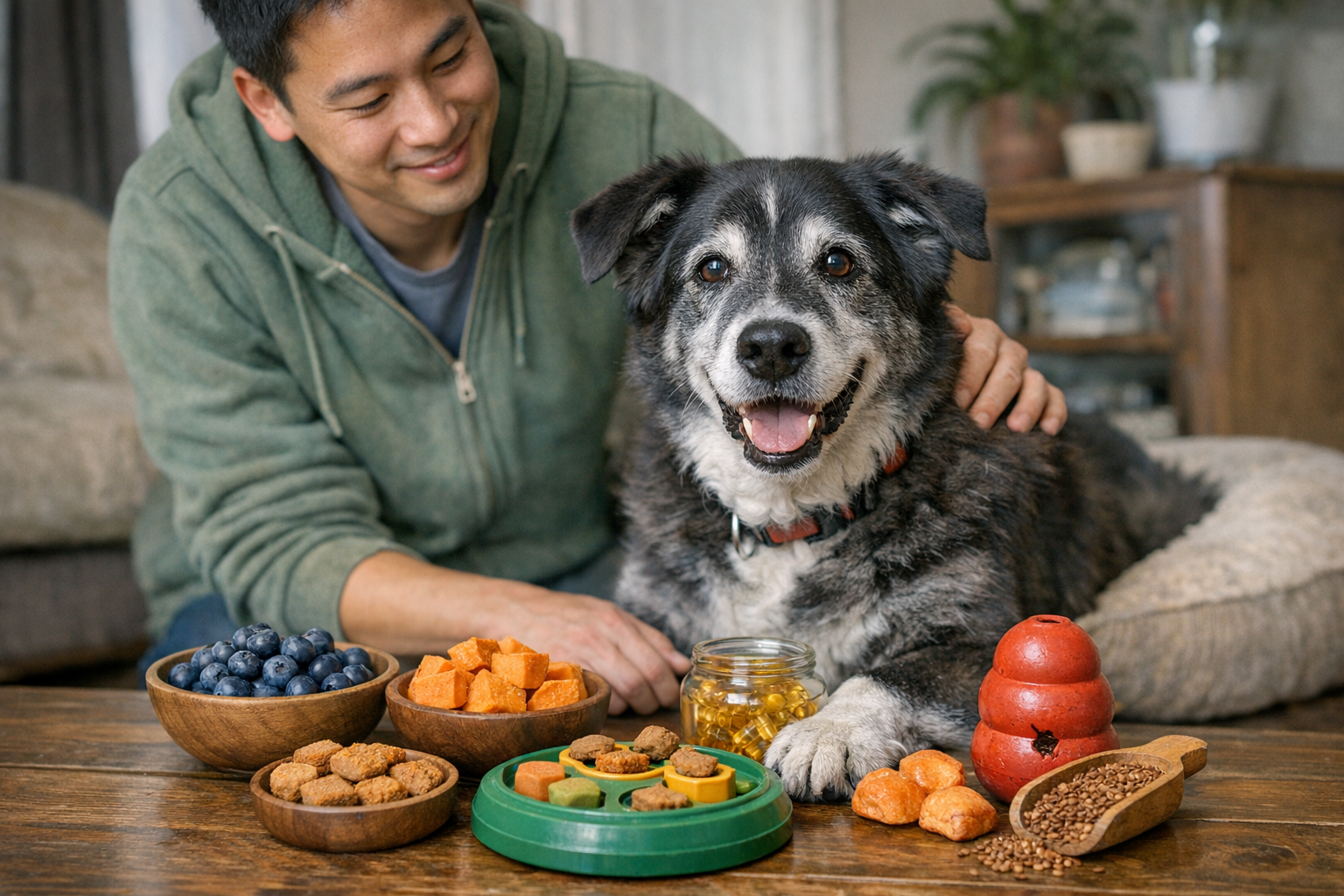
Managing Senior Dog Cognitive Decline: Brain-Boosting Treats
As dogs age, they may face cognitive decline, similar to dementia in humans. This article will help pet parents understand how to manage these changes with brain-boosting treats. Discover ways to support your senior dog’s brain health while keeping them happy and engaged.
Why This Topic Matters for Pet Parents
Understanding cognitive decline in senior dogs is essential for maintaining their quality of life. As dogs age, their mental abilities can decline, leading to confusion, anxiety, and changes in behavior. By recognizing these issues early and providing appropriate support, you can improve your dog’s comfort and happiness. Brain-boosting treats play a vital role in this process.
Key Insights
- Cognitive decline in dogs can begin as early as 7 years old.
- Signs of cognitive decline include disorientation, disrupted sleep patterns, and changes in behavior.
- Brain-boosting diets can help support mental function and slow cognitive aging.
- Engaging activities, in addition to treats, promote mental stimulation.
Expert Tips
Here are some veterinarian-style recommendations to manage your senior dog’s cognitive decline:
- Feed a balanced diet rich in antioxidants, omega-3 fatty acids, and vitamins.
- Incorporate brain games or puzzle toys into their daily routine.
- Keep a consistent daily schedule to reduce anxiety and confusion.
- Engage in regular physical exercise to promote overall health.
- Consider adding supplements that support cognitive function, such as DHA or specific herbs after consulting with your vet.
Best Products or Treat Types
When selecting brain-boosting treats for your senior dog, consider the following types:
- High-antioxidant treats: Look for treats made with blueberries, sweet potatoes, or spinach. These ingredients help combat oxidative stress in the brain.
- Omega-3-rich treats: Treats with fish oil or flaxseed can support brain health.
- Puzzle or interactive treats: These encourage your dog to think and problem-solve while enjoying their treats.
- Homemade options: You can create treats using ingredients like pumpkin, oats, and peanut butter, ensuring they are low in sugar and fat.
Common Mistakes to Avoid
- Neglecting regular veterinarian check-ups: Regular evaluations can help spot early signs of cognitive decline.
- Using too many treats: Treats should be a small part of their diet. Balance is key to prevent obesity.
- Ignoring behavioral changes: It’s important to pay attention to subtle changes as these could indicate cognitive decline.
- Overlooking mental stimulation: Dogs need both physical and mental activities. Don’t rely solely on treats for engagement.
FAQs
- What are the signs of cognitive decline in dogs?
Common signs include confusion, wandering aimlessly, disrupted sleep patterns, increased anxiety, and changes in appetite. - At what age do dogs start showing signs of cognitive decline?
Cognitive decline can begin in dogs as early as 7 years old. However, this can vary by breed and individual health. - Can treats really help improve my dog’s cognitive function?
Yes, treats that contain brain-boosting ingredients can support cognitive function when combined with other strategies like mental stimulation and physical activity. - Are there specific ingredients to look for in brain-boosting treats?
Look for ingredients rich in antioxidants (like blueberries), omega-3 fatty acids (like fish oil), and essential vitamins (like E and C). - How often should I give my senior dog brain-boosting treats?
It’s best to offer treats in moderation, taking care not to exceed 10% of their daily calorie intake. Balance treats with their regular meals. - Should I consult my vet before changing my dog’s diet?
Yes! Always consult your veterinarian before making significant changes to your dog’s diet or introducing new supplements or treats.
Conclusion
Managing your senior dog’s cognitive decline is essential for maintaining their happiness and quality of life. By incorporating brain-boosting treats and following expert tips, you can help support their mental health. Pay attention to their needs and always consult your veterinarian for personalized advice. With love and care, you can ensure your senior dog remains a joyful part of your life for as long as possible.