
The 2026 Guide to the Best Treats for Training Service Dogs
Training service dogs is a rewarding journey. Choosing the right treats is essential for success. This guide will help you find tasty and effective training treats to motivate your service dog.
Why This Topic Matters for Pet Parents
Training service dogs is crucial since they help people with disabilities lead more independent lives. Choosing the right treats can make a big difference in training effectiveness. Here’s why this topic matters:
- Encourages positive behavior.
- Strengthens the bond between the dog and trainer.
- Ensures the dog stays motivated throughout the training process.
- Helps in developing consistency in training methods.
Key Insights
Understanding what makes treat selection important can streamline your training program. Here are some key insights:
- Quality Ingredients: Look for treats made from wholesome, natural ingredients.
- Size Matters: Choose small treats that are easy to chew and swallow quickly.
- Flavor Variety: Dogs can get bored with the same flavor, so mix it up!
- Low-Calorie Options: To avoid overfeeding, select low-calorie and healthy treats.
Expert Tips
Veterinarians recommend certain strategies for choosing the best treats for training service dogs:
- Check for Allergies: Make sure your dog isn’t allergic to any ingredients.
- Avoid Artificial Additives: Pick treats free of preservatives, colors, and flavors.
- Use Praise Alongside Treats: Treats work best when combined with positive verbal affirmations.
- Monitor Weight: Keep an eye on your dog’s weight to prevent obesity.
Best Products or Treat Types
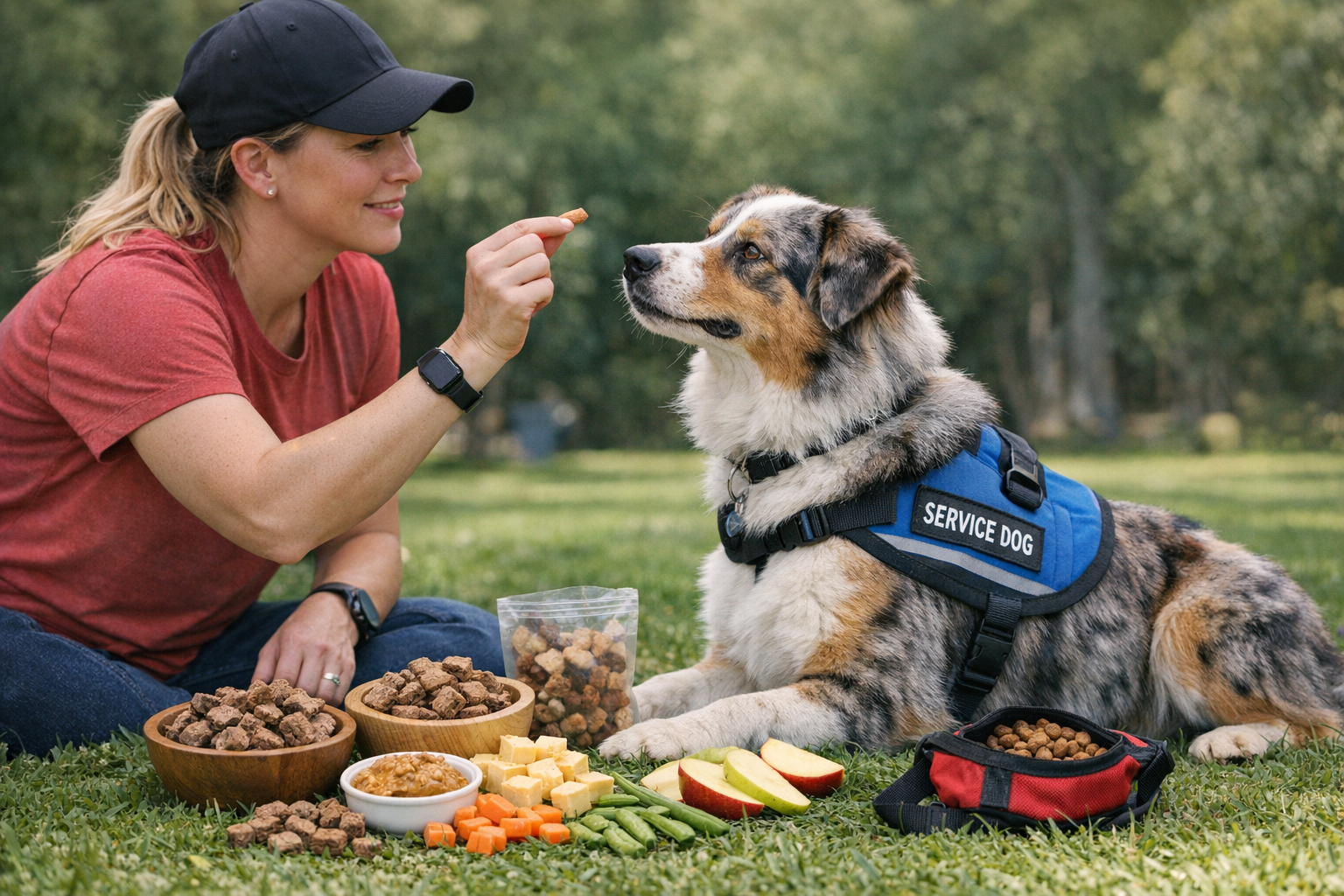
While there are many options out there, here are some of the best types of treats to consider for training service dogs:
- Soft Chews: Easy to break and chew, perfect for quick rewards.
- Freeze-Dried Meat: Packed with protein and flavor, dogs love this option.
- Peanut Butter Treats: Most dogs enjoy peanut butter, which can be a strong motivator.
- Fruits and Vegetables: Small pieces of apple or carrot can be healthy, low-calorie options.
- Homemade Treats: Crafting your own treats can ensure quality ingredients.
Common Mistakes to Avoid
Many pet parents make mistakes when selecting treats for training. Here’s what to watch out for:
- Using Too Many Treats: Over-treating can lead to weight gain and poor eating habits.
- Choosing the Wrong Size: Treats that are too large can slow training down.
- Ignoring Nutritional Value: Always check the ingredients and nutritional facts.
- Sticking to One Flavor: Variety helps keep your dog interested and eager to learn.
FAQs
1. How often should I treat my service dog during training?
Aim to reward your dog every time they perform a desired behavior, especially in the early stages of training.
2. Can I use regular dog food as treats?
Yes! Just make sure the pieces are small, so they aren’t too filling.
3. Are homemade treats better than store-bought?
Homemade treats can be made with quality ingredients, but ensure they’re safe and nutritious. Store-bought options can be convenient and effective, too.
4. What should I do if my dog loses interest in treats?
Try mixing up the flavors, using different types of treats, or incorporating praise and playtime as additional rewards.
5. How do I know if a treat is safe?
Check the ingredient list and look for treats made by reputable companies. Avoid anything with artificial additives.
6. Is it okay to give my service dog table scraps as treats?
Be cautious. Only give dog-safe foods, and avoid anything rich or harmful like chocolate, onions, or grapes.
Conclusion
Choosing the right treats for training service dogs is key to successful training outcomes. By focusing on quality, size, and variety, you can keep your service dog motivated. Remember to combine treats with praise and monitor your dog’s diet. With the right approach, your service dog will be well-equipped to assist you in everyday life.